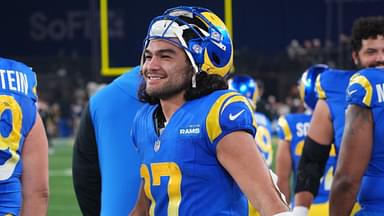
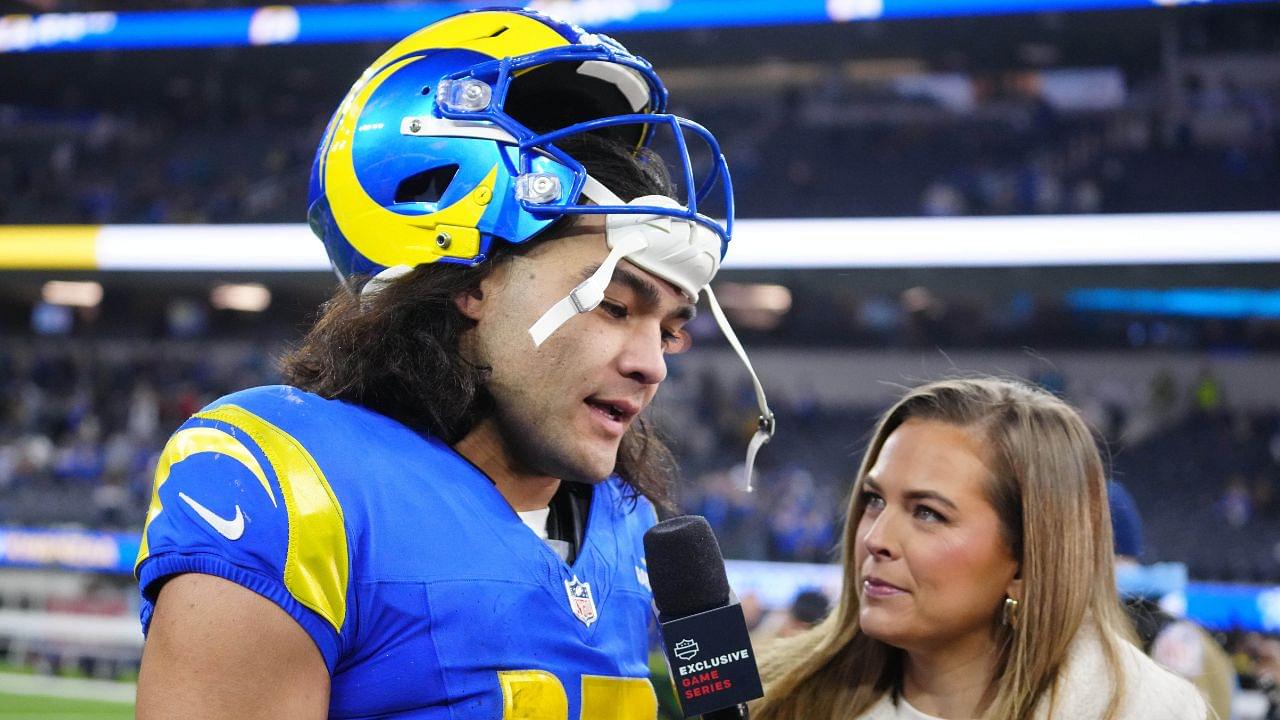
Los Angeles Rams wide receiver Puka Nacua issued a public apology after backlash over his gesture on a livestream. In his statement, Nacua admitted the gesture was “anti-Semitic in nature,” adding that he “did not know the meaning at the time.” The 24-year-old Rams WR also stressed that he “does not stand for racism or hate.”
Advertisement
During the livestream, Aiden Ross, who is Jewish, suggested that Nacua use a touchdown celebration where he rubs his hands together. That’s a gesture considered an antisemitic stereotype used to portray Jewish people as greedy. Nacua then performed the gesture multiple times on camera. When Ross asked whether he would use the celebration during a game, Nacua responded, “I promise, I got you, man.”
But the question now is: Can the league punish the WR for this? California attorney Nicholas J. Brooks has broken down the legal reality of this incident.
After the controversy, the NFL said it “strongly condemns all forms of discrimination and derogatory behavior directed towards any group or individual.”
The league’s statement added: “The continuing rise of antisemitism must be addressed across the world. The NFL will continue to stand with our partners in this fight. Hatred has no place in our sport or society.”
Brooks explained that disciplinary action would come through the NFL’s Personal Conduct Policy and team-level “conduct detrimental” clauses.
“When your employer publicly calls something anti-Semitic and derogatory, it fits squarely into the conduct detrimental to the integrity of the NFL bucket,” Brooks said.
The lawyer added that the policy is intentionally broad. In his words, “All NFL personnel must avoid conduct that undermines or puts at risk the integrity of the NFL, and discipline does not require a criminal conviction.”
Brooks emphasized that both the National Football League and the Rams have already defined the act as offensive, which matters legally. “Those admissions and the video itself are the evidence any league decision maker looks at,” he said.
That framing gives the NFL commissioner discretion to investigate and impose punishment ranging from fines to suspensions. To illustrate precedent, Brooks pointed to a past anti-Semitism case involving DeSean Jackson in 2020. In that incident, the team disciplined the player with what was “widely understood as a substantial fine plus mandatory education, even without a public suspension.”
Jackson had faced widespread backlash after sharing antisemitic content on social media, including a fabricated quote falsely attributed to Adolf Hitler and posts that expressed support for Louis Farrakhan. The Eagles responded by fining him more than $364,000 for “conduct detrimental to the team.” The Eagles also made it clear that continued employment would require a commitment to education and corrective action.
The NFL issued a strong statement, too, calling Jackson’s comments “highly inappropriate, offensive, and divisive.” It emphasized that they ran counter to the league’s core values. The takeaway, Brooks noted, is that team action and league action are separate tracks that can both apply in Nacua’s case.
So what are the realistic consequences Nacua could face? Brooks outlined three main options.
“Options include fines, mandatory anti-Semitism education, and community work,” he said, along with internal conditions tied to remaining with the team. At the league level, there is also “a possible suspension if the commissioner views this conduct as materially harmful to the NFL’s reputation.”
Even if Nacua avoids suspension from games, Brooks cautioned the impact doesn’t end there. “This incident becomes part of his conduct history, and repeat violations are treated more harshly under the policy,” he explained.
It can also affect future contracts: Teams may cite brand risk to “adjust guarantees, bonus language, or moral clauses accordingly.” Bottom line, as Brooks put it: “The question is not can they act, but how hard they choose to hit.”