


Chicago Bears Advance Hammond Indiana Stadium Plans

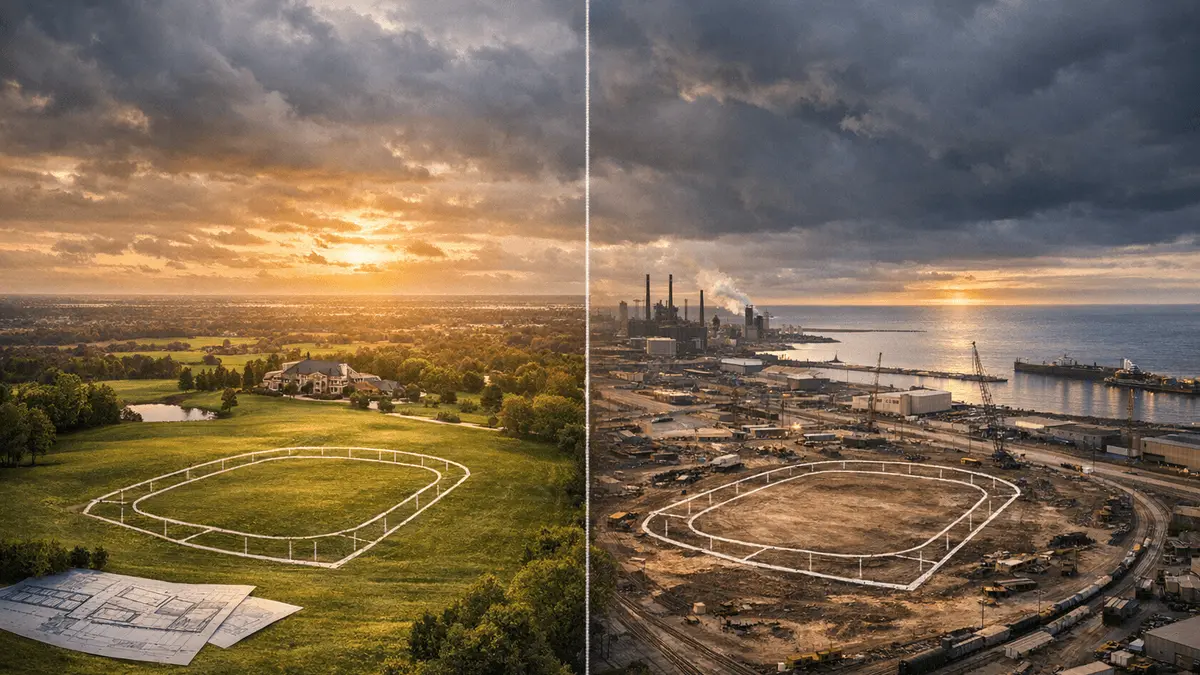
The Chicago Bears board of directors voted to formally advance a stadium development project in Hammond, Indiana. The franchise decision follows years of shifting proposals and a recent legislative impasse in Illinois, marking the most significant step toward an out-of-state relocation in the team’s 106-year history.
The statement came on the heels of an Indiana legislative package that has given the Bears a concrete, state-backed alternative to their Arlington Heights plans.
“We believe a world-class stadium project in Hammond will transform the region, connecting Northwest Indiana to the South Side of Chicago through the Loop and across neighborhoods and suburbs stretching north of the city,” Bears Chairman George McCaskey and CEO Kevin Warren said in a joint statement.
The vote positions Hammond as the team’s primary focus, though the organization noted that an exact site remains “to be selected” within the Wolf Lake area.
Statement from Chairman George H. McCaskey and President & CEO Kevin Warren: pic.twitter.com/U4lHzSV8Zv
— Chicago Bears (@ChicagoBears) June 5, 2026
The Standoff in Springfield
The Bears’ pivot to Indiana crystallized after the Illinois General Assembly adjourned its spring legislative session without passing measures to secure the team’s long-term tax structure.
A proposed “megaprojects” bill, which would have granted the Bears property tax certainty to develop a stadium campus in the suburbs, failed to gather necessary support.
A subsequent, last-minute bill passed by the Illinois Senate would have allowed municipalities like Chicago and Arlington Heights to establish local stadium authorities.
This public ownership model would have exempted a new stadium from property taxes entirely. However, the Illinois House adjourned without voting on the measure, leaving the Bears without a viable economic framework in their home state.
Conversely, Indiana lawmakers moved aggressively earlier in the year, passing legislation to establish a Northwest Indiana Stadium Authority. The Indiana package includes up to $1 billion in public financing subsidies backed by regional tourism, admissions, and food taxes to construct and lease a fixed-roof facility.
Under this framework, the Bears would commit $2 billion, retain stadium revenues, and hold an option to purchase the venue after 40 years.
Future of the Arlington Heights Property
The decision leaves the 326-acre site in suburban Arlington Heights in limbo. The Bears purchased the former Arlington International Racecourse property for $197.2 million in a deal finalized in 2023, originally intending to build a $5 billion enclosed stadium and enclosed entertainment district.
Negotiations over the site stalled due to prolonged property tax valuation disputes with local school districts and Cook County assessors. While Arlington Heights officials expressed disappointment following the board’s vote, local leaders stated they are shifting focus to alternative development opportunities for the massive acreage. Team officials have cautioned that while Hammond is the active priority, the Arlington Heights property remains in the portfolio should Illinois leadership establish a competitive tax counteroffer.
Understanding how stadium decisions move through the league’s ownership structure offers useful context; the NFL’s recent Super Bowl venue vote for Nashville illustrated just how quickly infrastructure decisions can crystallize once financing is in place.
Regional Identity and Operational Impacts
If the relocation crosses state lines, it will mark the first time the charter NFL franchise has operated outside of Illinois. The potential move has sparked widespread debate regarding team identity, though historians and former staff note that moving across the border into the Chicago metropolitan footprint would not trigger a name change.
Operationally, significant hurdles remain before construction can begin. The Bears must select an exact parcel of land in Hammond and obtain formal relocation approval from NFL team owners.
Furthermore, the franchise is bound to its Soldier Field lease through 2033, meaning an early departure to meet its targeted 2028 stadium opening would require the payment of a substantial contract break fee to the City of Chicago.
About the author

-

Kris Johnson •
Nick Caserio on NFL-to-College Returns: ‘It’s Ridiculous’
-

Adam Roarty •
Jacksonville Jaguars Add Quinn Ewers As Dolphins Trade For Kyle McCord
-

Kris Johnson •
Andy Reid Puts Patrick Mahomes on Track to Return for Chiefs’ Season Opener
-

Adam Roarty •
Big Ten, SEC Tighten Rules on NFL Players Returning to College As Dae’Quan Wright Joins LSU
-

Kris Johnson •
Aaron Donald Decision Still Rests on His Timeline, McVay Says
-

Kris Johnson •
Raiders Offer Optimism on Ashton Jeanty While Return Date Remains Unclear