


History of NASCAR Spotters: Birth, Evolution, Role in Modern Era of the Sport

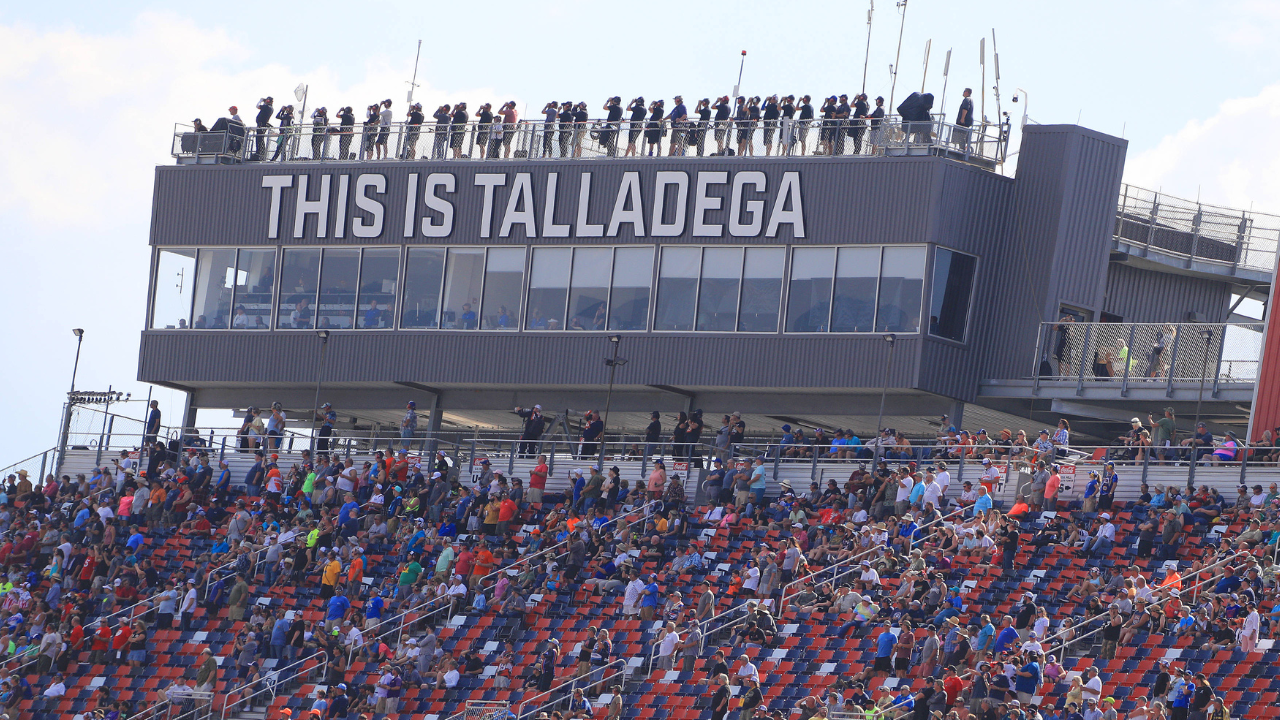
With headphones on the ears, a mic in front of the mouth, and razor-sharp eyes scanning the many high-speed machines firing across the racetrack, NASCAR spotters are no less than eagles in the skies. Courtesy of the importance of their job in warning the driver of safety hazards and keeping them in the know about potential threats to the running position, the trust they create within the crew is unbreakable.
Despite the sensibility of using spotters today, they weren’t always in the NASCAR scene and there was even a time in the 1950s when radio communication from within the car was deemed illegal. Though radios were used later in many forms, none were crisp enough or carried strong enough signals to be of much value to the driver. That changed in the early 1970s.
On June 20, 1971, Bobby Allison used a CB radio setup designed by a Motorola employee, Chuck Santorre, in his Holman Moody Ford. Driving in California’s Riverside International Raceway, Bobby was under the guidance of his crew chief Eddie Allison. The radio carried clear voices from Bobby to Eddie and further to Santorre, who was situated high up in the stands.
Bobby avoided a multi-car crash in that race and won it, thanks to the radio and warning from Santorre. He later revealed how Richard Petty had walked over to him a few weeks later to ask him about the radio and know where he could get one of them.
Spotter stand during the 2020 Daytona 500!! pic.twitter.com/TcmBGYFcMV
— Tj (@Tj_Adams37) January 6, 2024
Over the 1980s, the technology surrounding radio communication improved and the benefits of having spotters became more apparent to teams and NASCAR. By 1990, the promotion had gone as far as making spotters a mandate for the major races in the calendar.
In 2002, it ruled that the teams must have spotters in all 36 races.
How does one become a spotter in NASCAR?
Talking about spotters, 7x Cup Series champion Jimmie Johnson said, “We depend so heavily on spotters in all the races we compete in. They are watching out for us and in our ears to help us make split-second decisions that keep us out of harm’s way.”
Holding such a high responsibility on the hand is not everyone’s cup of tea. Unsurprisingly, many NASCAR drivers have gone on to become excellent spotters. Rick Carelli, who spots for Erik Jones and Joey Logano’s man in the sky, Coleman Pressley, were both famed drivers before they took the radio in their hands.
With the advancements in safety peaking like never before in NASCAR, the role of a spotter has become more nuanced with time. From being a live analyst to a cheerleader, the spotter is in many ways a backseat driver in the car.
About the author

-
Rahul Ahluwalia •
How Winning the Daytona 500 Changed Michael McDowell’s NASCAR Career
-
Soumyadeep Saha •
Carl Edwards Used to Sell the Paper to Earn Money Before NASCAR Career
-
Neha Dwivedi •
Ricky Stenhouse Jr. Hails NASCAR’s Efforts in Involving Drivers to Decide the New Championship Format
-
Gowtham Ramalingam •
Jimmie Johnson: How NASCAR’s Next Gen Car Drove His Team Ownership Endeavors
-
Gowtham Ramalingam •
Dale Earnhardt Jr. Finds Massive Support from Fans Over Atlanta Comments: “If Only We Could Have This Type of Racing Every Week”
-
Nilavro Ghosh •
What Caused The Massive Fire Between Daniel Suarez and Denny Hamlin at Daytona?