


“Let’s See What He Can Do”: When Kurt Busch Dared Jimmie Johnson to Race in the Same Equipment At the Peak of His Powers

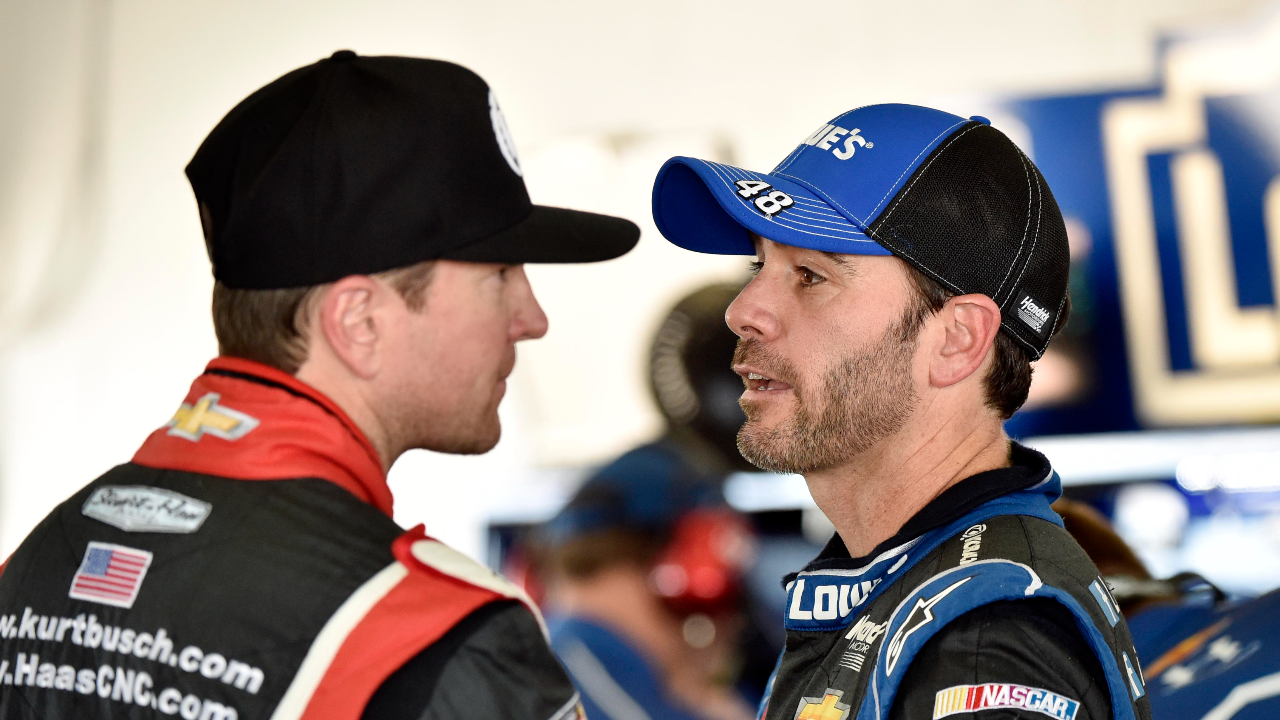
“We’re in his head,” Kurt Busch had said of his rivalry with Jimmie Johnson from 2009 to 2011, which was the buzz of the NASCAR world at the time. Johnson, driving the #48 Chevrolet for Hendrick Motorsports, had claimed he was merely returning the favor for earlier run-ins. The exchange best illustrates the duo’s tit-for-tat affair both on and off the track involving many memorable tussles and incidents.
The rivalry reached another peak at Richmond Raceway in 2011, where the sixth fiery exchange in three years between the two took place. Busch, piloting the #2 Dodge for Penske Racing, did not hold back in a post-race interview while attributing Johnson’s success to better equipment. Kurt then challenged Jimmie to race in similar equipment to show the world who the better racer was.
“When he came back, you could see it coming,” Busch had said. “That’s not something you see from Jimmie every day. But he’s got to learn to race. He’s been able to beat guys the last five years by just outdriving ’em with [better] equipment. If he wants to switch equipment, let’s see what he can do. I’m going to beat him fair and square with my Dodge.”
Busch’s anger was stoked by two separate on-track incidents during the race. Those fueled their rivalry to explosive realms while captivating NASCAR fans. On lap 187 of 400, Busch’s move into the first turn led to him locking his left front tire.
In an attempt to avoid contact, he clipped the left rear of Johnson’s Chevy, sending him into the wall. Johnson retaliated on lap 247, catching up to Busch and deliberately spinning him. This resulted in damage severe enough to require repairs. While Busch recovered to finish in the top-5, Johnson had ended his day in P31.
How did the feud between Busch and Johnson began?
The rivalry between Busch and Johnson started at Sonoma Raceway in 2009 where the HMS driver misjudged a turn and clipped the #2 Dodge, causing Busch to spin into the outside wall.
Tensions escalated a few weeks later in Chicago after Jeff Gordon nudged Johnson into Busch, intensifying their on-track battle as they banged doors throughout the race. Following the Chicago clash, Busch retaliated by aggressively confronting Johnson on the track. Johnson acknowledged his mistake at Sonoma but disputed any wrongdoing in Chicago.
Their enmity continued to simmer into the 2010 season. Busch expressed his frustration at Bristol Motor Speedway, stating,
“I’d rather lose to any other 41 cars out there than this #48 [Jimmie Johnson’s] car.”
The feud persisted into the following year with another exchange at New Hampshire in June 2010, where Busch pushed past Johnson in the closing laps, only for Johnson to retort by nudging Busch and slipping past to secure his 5th win of the season.
In 2011, their rivalry continued at Pocono, where the two jostled for position, trading paint in the process. The ongoing disputes culminated in a confrontation at Richmond, leading NASCAR to penalize Johnson by parking him for several laps for his aggressive tactics.
While such intense rivalries have become less common in the sport, the dynamic between Busch and Johnson remains a notable chapter in NASCAR history; a type of storyline that has the potential to draw new fans into the world of stock car racing.
About the author


-
Gowtham Ramalingam •
Martin Truex Jr. Is Not Done Racing Yet, NASCAR Champion Announces Future Plans
-
Abhishek Ramesh •
Denny Hamlin Rewrites the Championship Format, Wants NASCAR to “Chop off the Bottom” and Give Regular Season Dominance Its Due
-
Neha Dwivedi •
“That’s Not Tough News”: Dale Earnhardt Jr. Expresses Pride in JRM’s Role in NASCAR Drivers’ Rise Through the Ranks
-
Neha Dwivedi •
William Byron Not Stressing Out Over Third Championship 4 Appearance at Phoenix
-
Gowtham Ramalingam •
NASCAR Mission 600: Joey Logano Flies F-16 Ahead of Tribute to U.S. Armed Forces
-
Gowtham Ramalingam •
“Did the Drug Test, Did the Eye Test”: Mike Wallace Reveals Costly Betrayal As Fresh Details About NASCAR Rejection Surface