


“There’s Really No Thrill”: Chase Elliott’s Incredible Insight Into How NASCAR Drivers Adapt to Their Surroundings Over Time

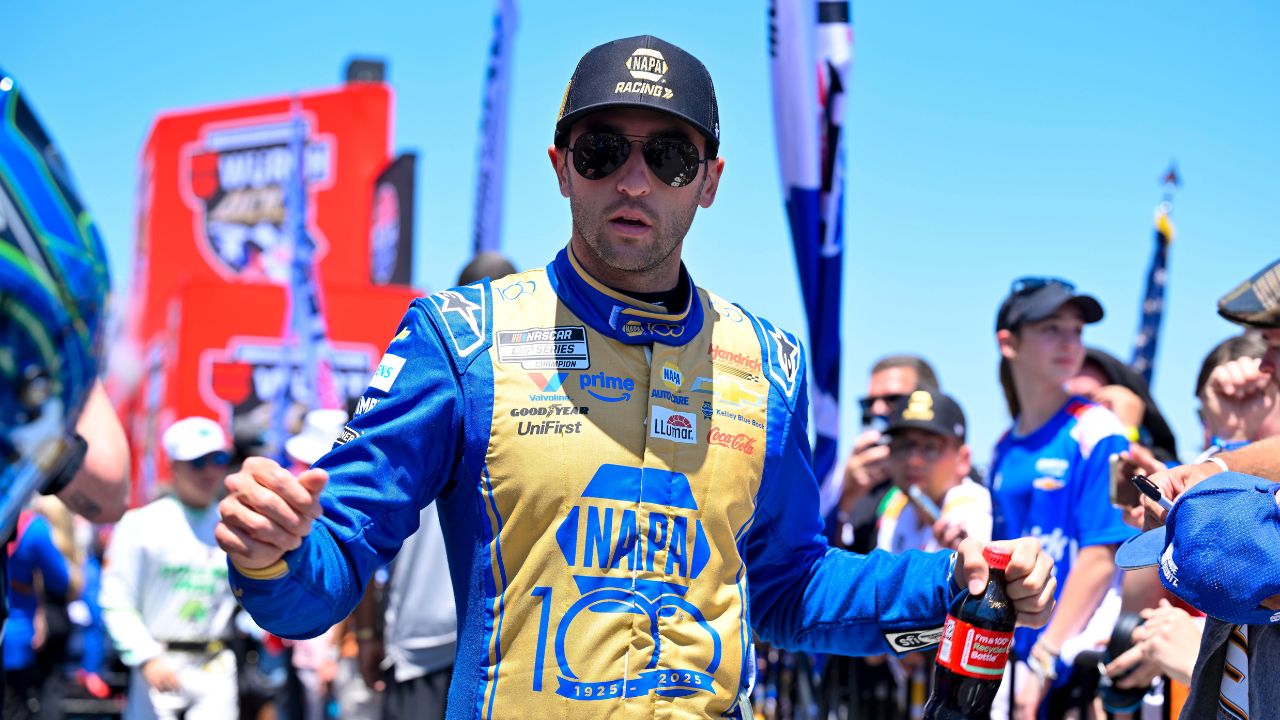
Racing is often synonymous with speed and thrill, but for those who live it week in and week out, that adrenaline rush eventually fades into routine. While fans may view drivers as fearless competitors chasing 200 miles per hour without blinking an eye, Chase Elliott recently offered a more grounded perspective.
Speaking on the MeatEater Podcast Network with host Steven Rinella, Elliott addressed a question many non-racers have likely pondered: do drivers truly not fear death, and is that what sets great racers apart? Elliott explained that it’s less about fearlessness and more about accepting the inherent risks that come with the job.
He pointed out that certain tracks — like Daytona or Talladega — carry a greater chance of wrecks and injuries simply due to the nature of pack racing and the high probability of something going wrong. But those risks, Elliott said, are part of the deal. Every driver knows what they’re signing up for and learns to live with that reality.
To make his point, Elliott drew a comparison: If someone drives 80 through downtown Bozeman, they’re going to feel like they’re flying. But if they’re doing 80 on the highway, where everyone else is doing the same, it feels normal. The same holds true in NASCAR. “I can say there’s really no thrill anymore about going 200 [miles per hour]. It’s not.”
According to Elliott, that rush may exist early on, but within weeks, the environment dulls the excitement. “It’s like so the thrill factor of it goes away after time, and then you start focusing in on more of like the small little fine details of how can I push the car a little further?”
What begins as a high-speed adventure quickly becomes a technical chess match. “It becomes so much more competition-based,” Elliott asserted. “It’s way more centered around that than it is like ‘oh wow, you know, just holding on for dear life going 200 miles an hour, and this is cool and crazy and wow, look at us.’ It’s not; that’s just not the mindset.”
Instead, greatness in the sport hinges on subtle differences. The smallest margins — imperceptible to outsiders — can separate a good driver from a great one. Elliott explained that much of it comes down to feel: sensations in the hands, feet, and body, combined with visual cues and the speed of processing information mid-race.
In the real world, NASCAR drivers are just like anyone else on the road — except for perhaps someone like Kyle Busch, who might still prefer to put the pedal to the floor. For most, though, the thrill of speed fades, replaced by the goal of perfection behind the wheel.
About the author


-

Srijan Mandal •
Kevin Harvick Rules Out “Sentimental Process” Ahead of Final Home Run in Sonoma
-
Gowtham Ramalingam •
“I Was Terrified”: Alex Bowman Recalls Conversation With Jeff Gordon and Rick Hendrick Post NASCAR Season Ruining Injury
-
Gowtham Ramalingam •
“My Head’s Just Spinning”: Christopher Bell Left Dumbfounded by the Importance of Track Position at Darlington
-
Gowtham Ramalingam •
“Falls Like a House of Cards”: Brad Keselowski’s Mantra to Save a Struggling NASCAR Team
-

Nilavro Ghosh •
Why “A Tiny Little Town” in Switzerland Fascinates Dale Earnhardt Jr.
-

Gowtham Ramalingam •
“Please Go Home”: Brad Keselowski’s Message to NASCAR Employees Ahead of Break