


How Do NASCAR Teams Pick Spotters for Drivers?

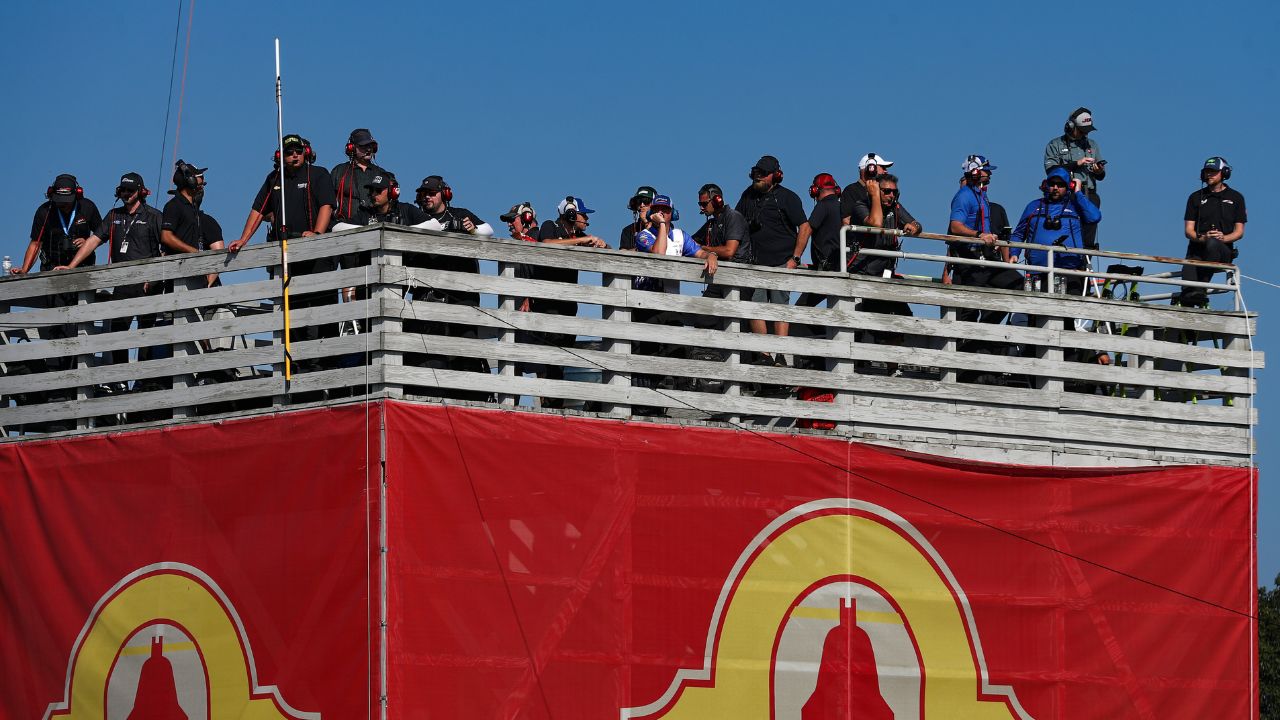
Spotters are a crucial part of any NASCAR team. They guide the drivers, from high up in the stands, throughout races, and help them reach the checkered flag in one piece in the best possible position. Joe Gibbs Racing President Dave Alpern detailed how they are chosen in a recent explainer video posted by his social media team.
Drivers have a lot of say in who their spotter is. Also, many drivers even come with their own spotters. The reason for this is that the driver-spotter relationship is based on a ton of chemistry. Alpern said, “A lot of it has to do with communication and chemistry. A spotter is not only the eyes and ears for a driver.”
Drivers cannot see much, except what’s in front of them, with their race helmets on. It is the spotters who help them overcome this hurdle. Alpern continued, “They’re also part psychologist. They’re talking them through the race, they’re giving them advice, and they’re keeping them cool. So, a lot of it has to do with chemistry.”
Some drivers like spotters who are constantly providing instructions on the radio. And then, others just want silence when racing. So, they get to pick which individual they are most comfortable working with. More often than not, drivers usually opt for spotters whom they have worked with for years in the past.
How NASCAR became comfortable with using spotters in races
There was a time when carrying a radio inside the car was a serious offence in stock car racing. This scenario changed in the 1960s, when drivers began exploring the use of radios during races. But none of the technology they had was useful enough to help them navigate through an entire event. All this changed for the better on June 20, 1971.
Bobby Allison used a CB radio designed by Chuck Santorre, a Motorola employee, for a race at the Riverside International Raceway. The radio carried clear voices between Allison, Santorre, who was high up in the stands, and crew chief Eddie Allison. Thanks to this, the driver was able to avoid a huge multi-car crash and win the race.
This moment was a turning point in the usage of spotters and radios. Radio technology improved a lot throughout the 1980s, and NASCAR mandated the use of spotters for major races in the 1990s. In 2002, it mandated their use for all 36 races on the calendar.
About the author

-
Gowtham Ramalingam •
“We Hope It Comes Back”: Road America President on NASCAR Cup Series Return After Being Dropped From Schedule
-
Neha Dwivedi •
Dale Earnhardt Jr. Feels Responsible for Being Honest About NASCAR to His Fans Through His Podcast
-
Gowtham Ramalingam •
Denny Hamlin Reveals What Sets 23XI Racing Apart From Every Other NASCAR Team
-
Neha Dwivedi •
“Kind of Separated from the Fans”: Ryan Blaney Details How Bowman Gray Offers a Different Atmosphere Than Other NASCAR Tracks
-
Srijan Mandal •
Why Chase Elliott Isn’t Out To Correct Wrongs From 2023 in 2024
-
Soumyadeep Saha •
Jimmie Johnson Delighted With Legacy Motor Club’s NASCAR Jump Since Taking Charge as Owner