NFL teams have always looked for ways to work around the salary cap and free up immediate money to spend. One of the most common methods is a cap conversion. The process involves converting a portion of a player’s base salary into a signing bonus, which lowers that player’s salary cap hit for the current season. But do NFL players actually lose money when this happens?
Advertisement
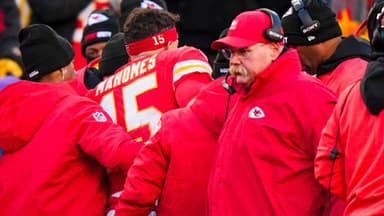
We’ve seen several stars use this strategy. Just recently, Patrick Mahomes helped the Kansas City Chiefs free up roughly $43.5 million in cap space through a restructure. Travis Kelce and Chris Jones have done similar conversions with their contracts in previous years for the same team.
When a cap conversion happens for these players, they usually receive some of that converted money sooner rather than later. That’s because an NFL base salary is typically paid out in weekly game checks during the season. When part of that salary is turned into a signing bonus, the bonus is often paid out shortly after the restructure is finalized.
Of course, this isn’t extra money. The total value of the contract generally stays the same; only the payment structure changes. So players aren’t taking a pay cut… they’re just shifting when and how they get paid.
But why would an NFL team employ this strategy? Because signing bonuses can be prorated, or spread out, over the remaining years of the contract for salary cap purposes. That lowers the player’s cap hit in the current year and pushes some of it into future seasons. The team gets immediate cap relief, while the player keeps the same total earnings.
However, if there’s a pay cut, contract termination, or guaranteed money that has already been paid out and prorated, the player can become a massive dead cap hit for the franchise. A recent example is Russell Wilson, who carried a record $85 million dead cap hit over two years after being released by the Denver Broncos.
Other examples include Matt Ryan’s $40.5 million dead cap charge after being traded from the Atlanta Falcons to the Indianapolis Colts. Aaron Rodgers counted for $40.3 million against the Green Bay Packers’ cap after his departure. And Carson Wentz left the Philadelphia Eagles with a $33.8 million dead cap hit.
This is to say that a cap conversion can be risky in the NFL because it can lead to significant financial losses. For players as good as Mahomes, though, teams are usually willing to take the hit to provide immediate relief. That’s called taking advantage of a championship window.
Next season, Mahomes will hit KC’s cap for $85 million. They will probably do the same thing and convert the money to free up space. They’ve now followed this pattern two years in a row.
Other NFL players who could be likely candidates for salary conversion in 2026 include Deshaun Watson, Lamar Jackson, Dak Prescott, and Jared Goff. All would free their teams $30-$40 million in cap space.