


Mercedes W16 Review: Silver Arrows Ditch Failed Design Quest to Adopt Red Bull-Inspired Winning Formula

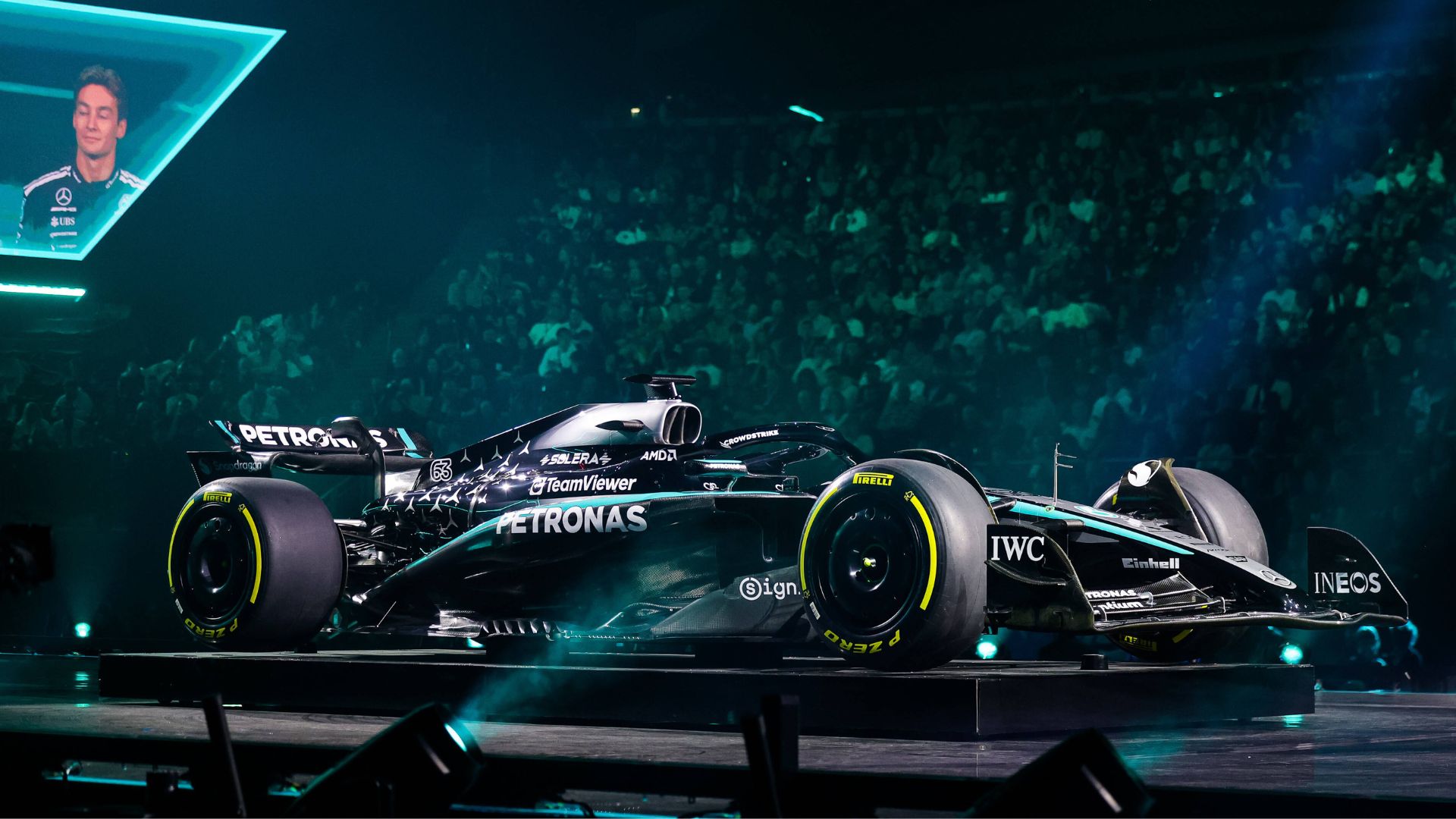
It’s been three years since the ground effect regulations came into effect, yet Mercedes still hasn’t settled on a definitive sidepod design. A lack of results has forced constant changes, with the Silver Arrows now opting for yet another approach ahead of the 2025 season.
For the final year before the regulations reset, Mercedes has chosen to follow the Red Bull route. This decision reflects their desperation to stay competitive, despite new regulations coming into effect in 2026.
On Monday, Mercedes unveiled its car for 2025, the W16. The Race analyzed renders of the new challenger and pointed out how the Brackley-based team made “striking visual changes”, in their final hope to catch up to the leading pack.
Journalist Ben Anderson pointed out how the sidepods had been a ‘bane’ for Mercedes and how despite multiple attempts to get the concept right, they have failed.
In 2022, the Brackley-based squad came up with a bizarre-looking ‘zero sidepod’ design, which affected the car’s performance. It was clear that they had gotten things wrong, but when they scrapped that idea midway through 2023, rear stability issues crept up.
Even when they overhauled their 2024 car to introduce the conventional P-shaped sidepod inlets, the car performed well only on some tracks.
The W16 sidepod overhaul by Mercedes
This season, Mercedes has gone with a “split horizontal and vertical T-shaped inlet”, quite similar to Red Bull‘s overbite inlet opening, which they introduced last year. Anderson stated how the sidepod shape in itself is different with a more ‘aggressive undercut’ and ‘steeper ramp’ to improve the airflow to the beam wing and the underfloor.
Overall, this sidepod packaging is “tight” in hopes of improving the overall aerodynamic efficiency.
Anderson also noted that a few teams have opted to rearrange some of the cooling apparatus, which could impact airflow.
The W16 hits the track for the first time pic.twitter.com/G5uwROfN8Q
— Mercedes-AMG PETRONAS F1 Team (@MercedesAMGF1) February 25, 2025
He believes that if these changes work as Mercedes hopes, they could see a boost in straight-line speed. However, the caveat is that if the aerodynamicists have overestimated the engine’s capacity, it could undermine their expected gains.
This highlights the many factors F1 teams must consider when upgrading a car, especially in the ground-effect era. If one area isn’t aligned with the overall concept, it can lead to issues like rear instability, poor handling, and an unstable ride.
What else is different about the 2025 Mercedes car?
Regarding airflow management at the front, the front wing and suspension have been crucial for teams to refine. Mercedes experimented extensively with the front wing last season, even introducing a flexible design at the Canadian GP.
Heading into 2025, Anderson noted that the team has retained the same wing design from the end of last season, with one slight modification. They have reattached the nose tip to the main plane of the front wing, as seen in 2022-23.
Last season, many teams introduced a slot gap at the bottom element of the front wing, creating an opening between the nose tip and the main plane. This seemingly improved airflow to the underfloor, enhancing aerodynamic efficiency. However, Mercedes appears to have found a reason to revert to their earlier design, at least in the nose tip area.
Anderson also observed a minor adjustment to the rear suspension of the W16. While Mercedes has retained the push-rod configuration, they have added more anti-lift, likely to improve control at low ride heights and address the rear sliding and tire overheating issues they faced in 2024.
For the front suspension, Mercedes has stuck with a push-rod setup, unlike McLaren and Red Bull, who use a pull-rod configuration. While the pull-rod suspension has aided airflow efficiency for these teams, Mercedes may have weighed the risks and rewards of such a significant change.
For context, Ferrari has made the switch from push-rod to pull-rod suspension at the front.
About the author


-

Somin Bhattacharjee •
“We can feel like Toto Wolff by wearing these $500 headphones”- Mercedes launch earphones and headphones that look like ones F1 crew wear
-

Pranay Bhagi •
George Russell Could Be Unjustly Replaced by Max Verstappen as Toto Wolff Eyes Red Bull Star for 2026
-

Subham Jindal •
Bahrain GP: Pirelli F1 chief defends 2021 prototype tyres after criticism from Lewis Hamilton and Max Verstappen
-

Naman Gopal Srivastava •
“Toto Wolff Gonna Have Problems”: Mercedes Leadership Warned About Lewis Hamilton and George Russell With Rising Level of Mercedes
-
Sabyasachi Biswas •
Lando Norris Reveals Fernando Alonso and Lewis Hamilton’s ‘Intense’ Rivalry Got Him Hooked to McLaren and Formula 1
-
Aditya Srivastava •
Lando Norris Reveals He Finds American “Cringe” When They Try to Replicate One Thing by Brits