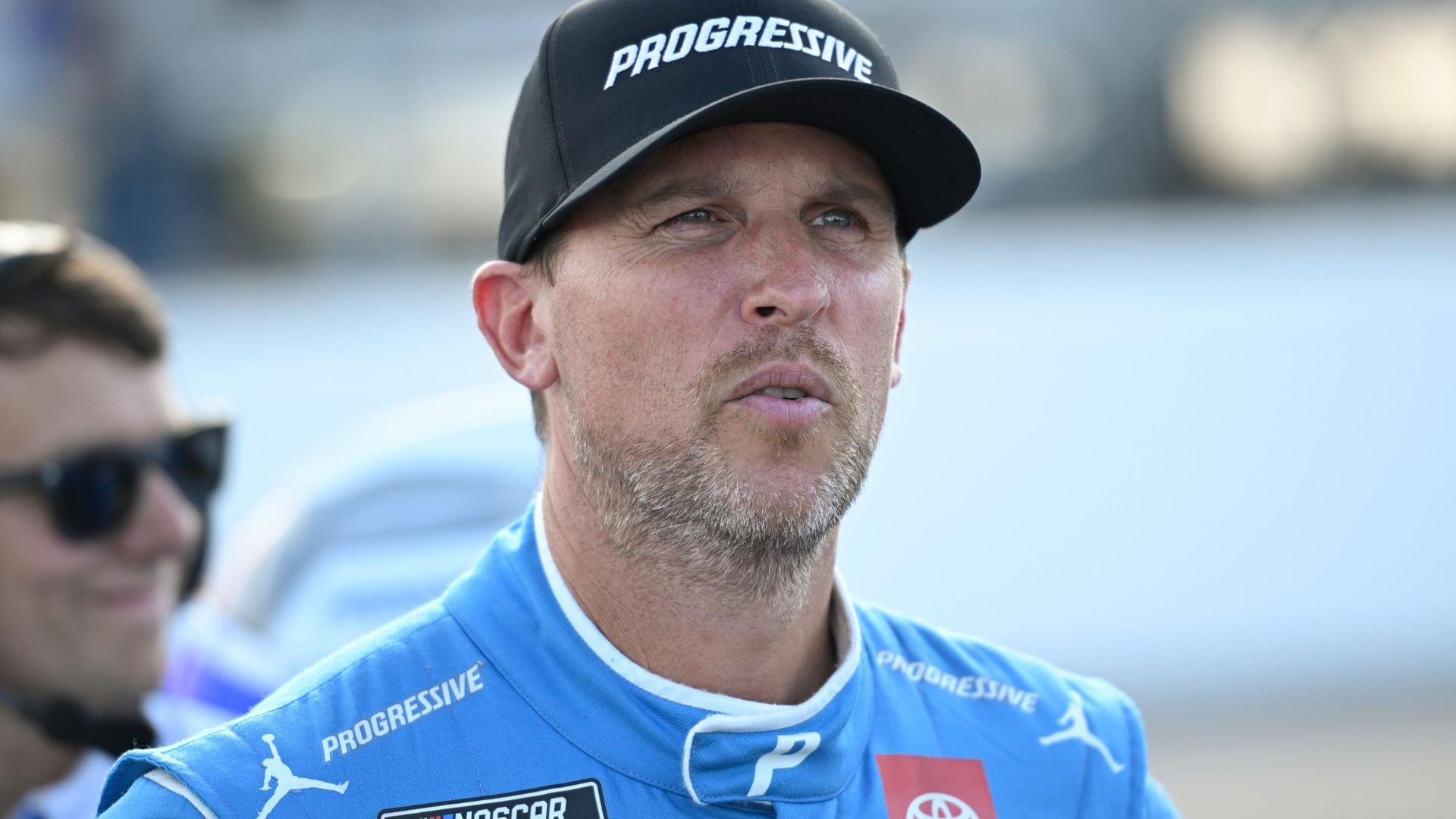
As NASCAR weighs the idea of granting teams a measure of latitude in how cars are built and adjusted, the conversation has reopened around innovation and competition. The sanctioning body has long enforced strict rules that limit modifications and require teams to purchase standardized parts from approved suppliers. While those regulations may begin to ease, Denny Hamlin opined that the Next Gen car has already shifted the competitive balance more toward driver ability than any previous era.
Advertisement
Even so, he has acknowledged a preference for engineered cars, which he believes offer technical advantages and provide teams with a platform to demonstrate their ingenuity. Hamlin expanded on that viewpoint during an appearance on Sean Kelly’s Digital Social Hour Podcast, where he explained how the sport’s competitive makeup has evolved over time.
He said, “NASCAR was probably 60% car back in the day, 40% driver because you used to be able to build trick cars. But over the last few years, they introduced what is called Next Gen car. It’s essentially like a Lego set, right? Everyone has to buy the same Lego set.”
That shift, Hamlin explained, eliminated much of the traditional manufacturing freedom teams once enjoyed. He added, “We no longer can manufacture our own bodies or chassis or whatever. To save the team’s money… everyone has to run the race in the same car.”
As a result, the competitive emphasis has tilted. With most teams working from identical equipment, the driver’s role carries greater weight. According to Hamlin, the cars may feature different manufacturers on the nose, but the separation remains narrow.
Ford, Chevrolet, and Toyota differ largely in body shape and engine branding, while the underlying platform remains the same across the grid.
From Hamlin’s perspective, that sameness has sharpened the importance of execution behind the wheel. At the same time, he has not hidden his appreciation for a more open technical environment. He pointed to Formula One as a model that captures his interest, largely because it allows teams to apply creative thinking to gain an edge.
That freedom, he believes, fuels fascination by showcasing evolving technology and aerodynamic development. Hamlin stated that watching teams push engineering boundaries, rather than operating within a tightly controlled box, remains central to what excites him about motorsports.
Former crew chief shares the same opinion as Hamlin
Evernham echoed the #11 JGR driver’s sentiments, reinforcing the argument that NASCAR has drifted away from its roots. Speaking with John Roberts on Kenny Wallace’s show, Evernham described just how different the landscape once looked.
He recalled an era when teams obsessively refined their cars, often referring to the process as rubbing on them. Crews searched relentlessly for any detail, no matter how small, that could deliver an advantage over the competition.
Evernham also revisited a familiar saying from that period. A racecar, he explained, was never truly finished. It simply reached the point where it was ready to go racing. In his view, that philosophy defined the sport’s identity, and he believes NASCAR needs to reconnect with it.
For Evernham, restoring that mindset means reviving the sport’s heartbeat by allowing more personality and human influence to shape what happens on track.
He also addressed the financial argument surrounding the current Gen 7 platform. According to Evernham, the new car will never dramatically reduce costs, but it can slow the rate at which expenses climb. His focus, however, remains on competition.
He wants to see more adjustability built back into the cars so teams can make meaningful changes during a race. That flexibility, he argued, would shift attention away from constant fuel management and back toward improving performance as the race unfolds.