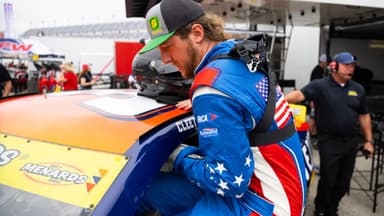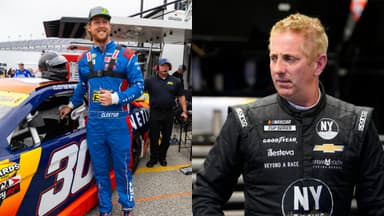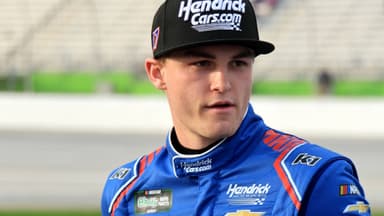
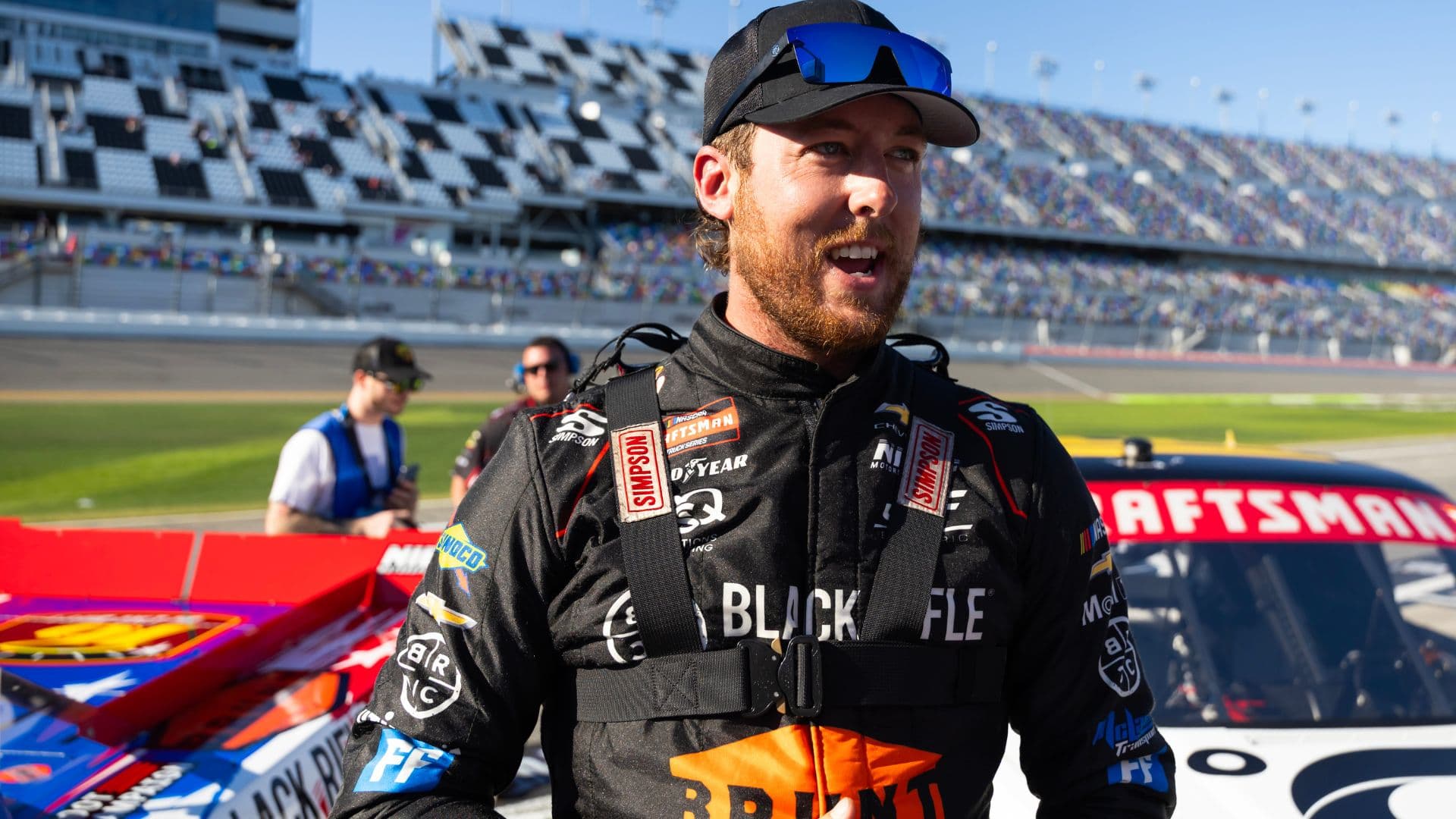
The debut of Cleetus McFarland in the NASCAR Craftsman Truck Series this season stirred hot debate. Some insiders and fans raised eyebrows, and their doubts seemed vindicated when McFarland was caught in a wreck six laps into the race at Daytona.
Advertisement
Critics pointed to McFarland’s lack of seat time in reaching that level of competition. They argued that the outcome showed what happens when a driver is thrown into the deep end without experience behind the wheel of a stock car. Among fans, the conversation took a wider turn.
Some viewed McFarland as a marketing engine for lower tiers and argued that if NASCAR opens the door for a driver with a thin wheel time, then the next driver with a similar logbook should walk through the same gate, with or without a fan base. In their view, the rulebook should read the same for everyone. However, McFarland’s entry has also drawn support from inside the sport.
McFarland signed a two-year deal with Richard Childress Racing to compete in the NASCAR O’Reilly Auto Parts Series. And former Cup driver Mark Martin has said the partnership could move the needle for the sport, widening its reach.
“Cleetus McFarland is huge. He’s an incredibly popular figure on YouTube. He does really great videos and is loved by so many. He is more popular than any Cup driver. He has a stronger following, let’s say, than any Cup driver in NASCAR,” said Martin in a video on the Dirty Mo Media YouTube channel.
“So, if we get Cleetus McFarland involved in NASCAR racing, it’s going to be a win for all of us race fans because it’s going to bring more fans, more eyes on our sport,” he continued.
“And even hopefully more ticket sales at the racetracks. So, this is a big win for NASCAR. Of course, he’s announced that he’s come to an agreement with RCR, Richard Childress, to do some O’Reilly series racing,” added Martin.
However, the debate around McFarland is always about how drivers climb the ladder in stock-car racing. Martin noted that the path into NASCAR has long followed a well-established route.
The journey starts in karting, moves through dirt sprint cars, Legend cars, and Late Model competition, and then leads to events such as the Snowball Derby, the Winchester 400, and the All-American 400. From there, drivers step into the ARCA Menards Series, the Truck Series, the O’Reilly ranks, and finally the NASCAR Cup Series.
Still, that route is not the only road into the garage. McFarland carved out his own lane through online content, building a following of nearly five million subscribers on YouTube. Martin argued that such reach could help NASCAR draw viewers who might not have followed the sport before. The veteran also noted that he has watched McFarland run laps in ARCA competition and believes he can handle a car.
McFarland’s first step in the Tier 2 Series of NASACR will come at Rockingham Speedway. The deal for 2026 and again in 2027 is also expected to include starts at Daytona International Speedway and Talladega Superspeedway.
Of course, following on social media does not guarantee smooth sailing on track. Critics argue that placing a driver like McFarland in the field without enough laps in stock-car competition could put others in harm’s way if the driver loses control and crashes.
It is a valid point too. And gaining experience through laps in ARCA races might serve both the driver and the field before stepping into tier-two or tier-three NASCAR competition.