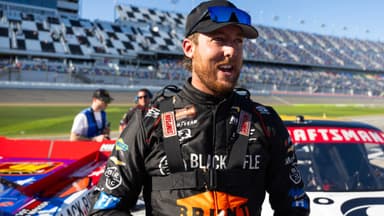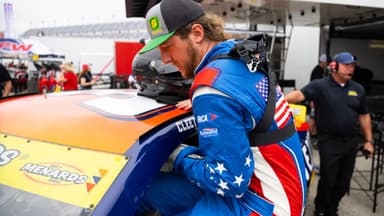
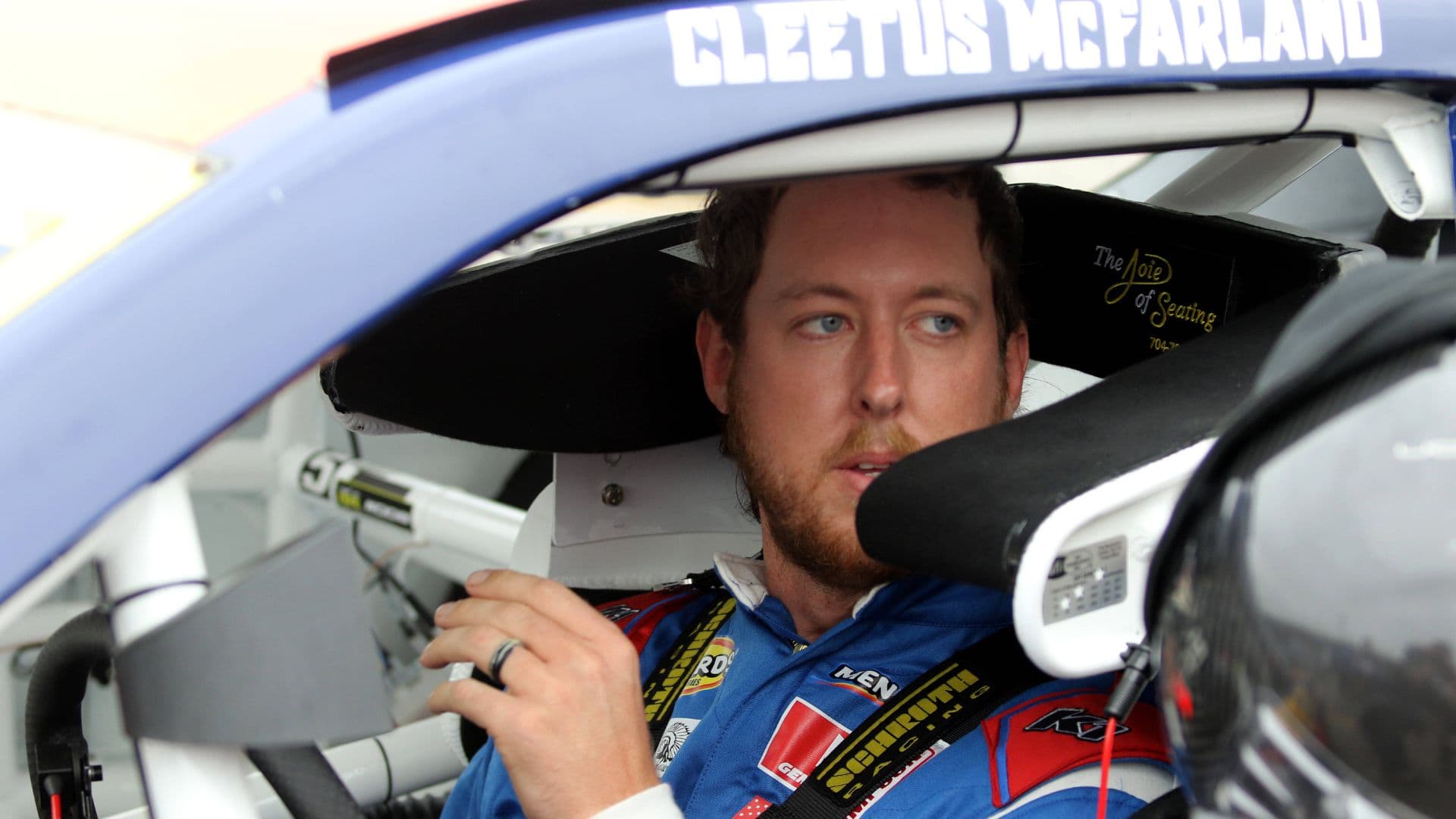
Cleetus McFarland has put one foot in the door of the NASCAR Xfinity Series after signing a two-year agreement with Richard Childress Racing. His first outing in the second division will come at Rockingham Speedway, with the agreement also expected to include starts at Daytona and Talladega Superspeedway. Sadly, it has sparked some rather unpleasant talk surrounding him in the garage and around the community.
Advertisement
Many have questioned how a figure from YouTube landed a seat in the series, and some have pointed to his past run at Daytona in the NASCAR Craftsman Truck Series, where his race ended in a wreck six laps after the green flag. In the court of public opinion, that moment became the yardstick for judging whether he belonged in the field.
Veteran driver Mark Martin, however, has come out in McFarland’s defense, arguing that the road to NASCAR has never been a one-lane highway. Martin said that drivers have long reached the national stage through many routes.
Martin said on Dirty Mo Overdrive, “There’s all different paths to get to NASCAR. All the way back to my days when I first got started in the early 80s, there were different paths for drivers. The traditional path would be say a local late model driver who worked his way up and became a contender at let’s say the Snowball Derby or the Winchester 400 or the All-American 400 and built their name up that way.”
“That is the traditional way, but there’s always been other routes for selected few through the years. There were back in the 80s and all the way to today. And so Cleetus has made a name for himself doing really fun videos. And I personally don’t know Cleetus, but I have seen some of his racing in the Crown Vicks, and I’m going to tell you, Cleetus can drive,” he continued.
Martin acknowledged that McFarland has not climbed the ladder through series such as the ARCA Menards Series, which often serves as a gateway to NASCAR. Still, the veteran brushed aside the backlash tied to the YouTuber’s Truck Series outing at Daytona.
Racing is one of the fields where drivers learn through trial and error, and the sport rarely hands out free passes. A driver can run out of luck or find trouble in the blink of an eye. Even drivers with decades in the cockpit still make mistakes, though the gap lies in how often those moments occur.
What stood out to Martin was how McFarland handled the fallout. Rather than pointing fingers, McFarland joked after the race that he “didn’t check himself before he wrecked himself.” And that reaction spoke volumes about how the driver took the moment on the chin.
That mindset could serve McFarland well with a team such as Richard Childress Racing, which has built a reputation for producing cars that run in the draft on superspeedways. If McFarland finds himself in one of those machines, the equipment could allow him to stay with the pack and keep pace in the draft, particularly when the series goes to Talladega.
New faces in the sport often face a trial by fire. Every move sits under a microscope, and each slip can turn into a talking point. Martin argued that drivers who are still learning should be given room to find their footing instead of continuously being raked over the coals for every misstep.
He knows that path from his own run through the sport. Early in a career, even drivers who later build long records make their share of mistakes. Over time, they settle in, learn the ropes, and smooth out those rough patches.