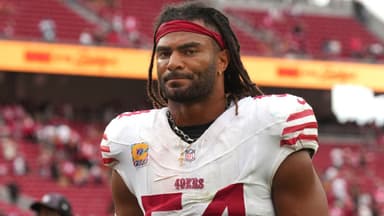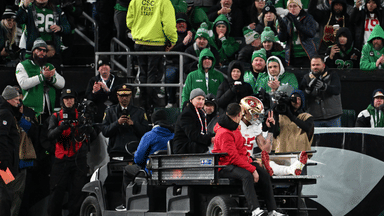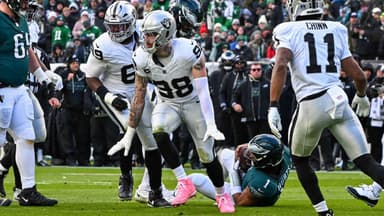
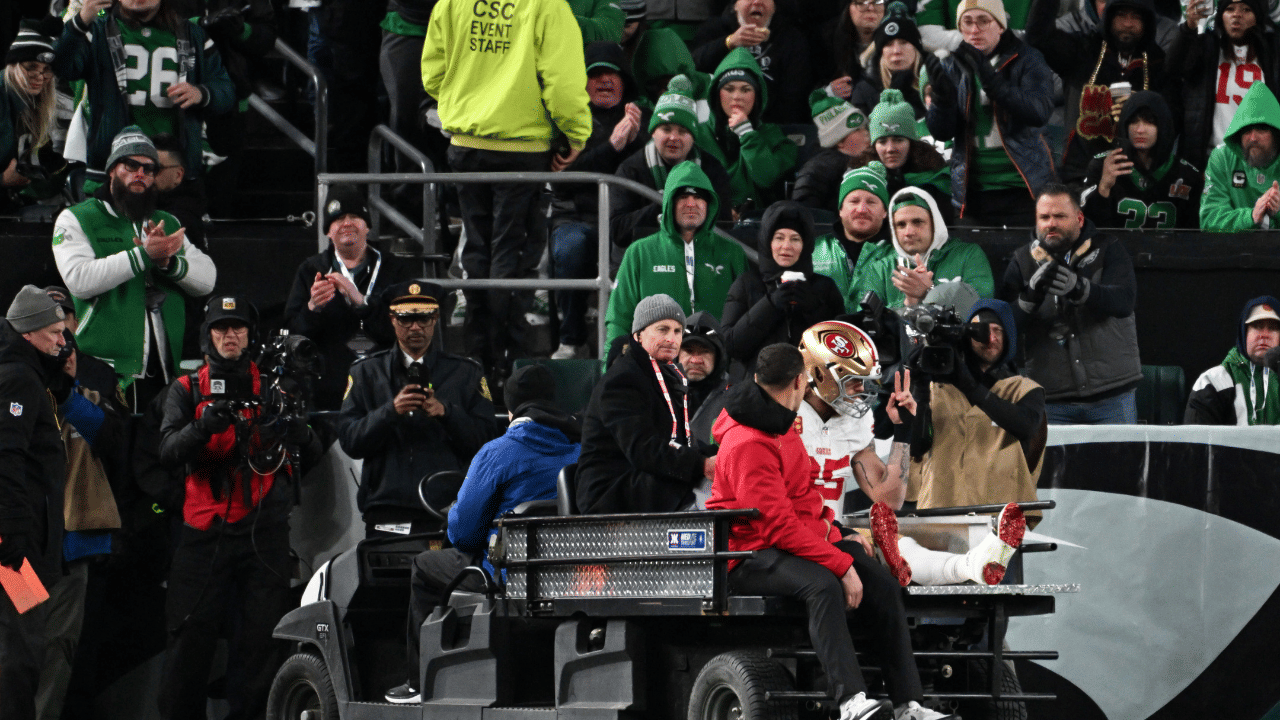
San Francisco 49ers tight end George Kittle suffered one of the most feared injuries in football during Sunday’s NFC Wild Card loss to the Philadelphia Eagles, with medical experts confirming a lengthy recovery timeline. Following an apparent Achilles rupture, Kittle was carted out from the game against the Eagles on Sunday.
Advertisement
When athletes describe the moment an Achilles goes, the language is often unmistakable.
“If an athlete tells you they felt a pop or they felt something snap in the back of their calf, it doesn’t always have to be the Achilles,” Brian Sutterer, MD, explained on his YouTube channel. “Nine times out of 10, it’s going to be the Achilles.”
That description matched what unfolded for Kittle, who went down along the sideline after his first catch of the game and remained on the ground before being carted off. He was later seen hopping on one foot as he made his way to the locker room. The 49ers soon confirmed the diagnosis as an Achilles injury, ending any hope of a quick return. According to the doctor, the long-term outlook is clear and concerning.
“If this is in fact confirmed to be an Achilles rupture, right, typically a nine to 12 month recovery period.”
Timing now becomes critical. Surgery is expected soon, but even an efficient recovery may push into next season.
“Nine months, this is mid-January, by the time he has surgery, could still get him back September, October time frame, but you’re starting to get into that point where it’s going to affect you into next season.”
For a player like Kittle, whose game is built on explosion, power, and violent change of direction, an Achilles rupture presents major challenges. Even with modern surgical advancements, full restoration of explosiveness is far from guaranteed, particularly for veteran players. The injury also reignited debate over grass versus turf, but the doctor dismissed the idea that the surface was to blame.
“That’s not the case here. We see this is very clearly a grass field, and we see that these injuries are happening on grass fields.”
Instead, the mechanism of the injury matters more than the surface itself.
“When your foot gets locked into this dorsiflexed position where you’re in that compromised position, and you’re trying to push forward, it doesn’t matter what field you’re on. This is going to happen on turf. This is going to happen on grass,” he explained.
Kittle’s injury adds to a growing list of devastating setbacks for the 49ers in a season already defined by health issues. Beyond ending his postseason, the Achilles tear casts a long shadow over San Francisco’s 2025 campaign and raises real questions about when, and how effectively, their emotional leader will return.