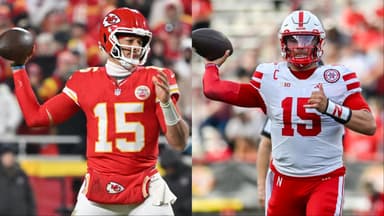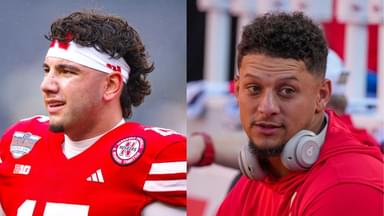
During his freshman year at Nebraska in 2024, Dylan Raiola was known mostly as a meme-worthy, faux Patrick Mahomes more than anything else. After notoriously asserting that he can’t “help the way that god made him look,” the 20-year-old has since done his best to prove that he is a legitimate option at the quarterback position, and not just a Mahomes wannabe.
Advertisement
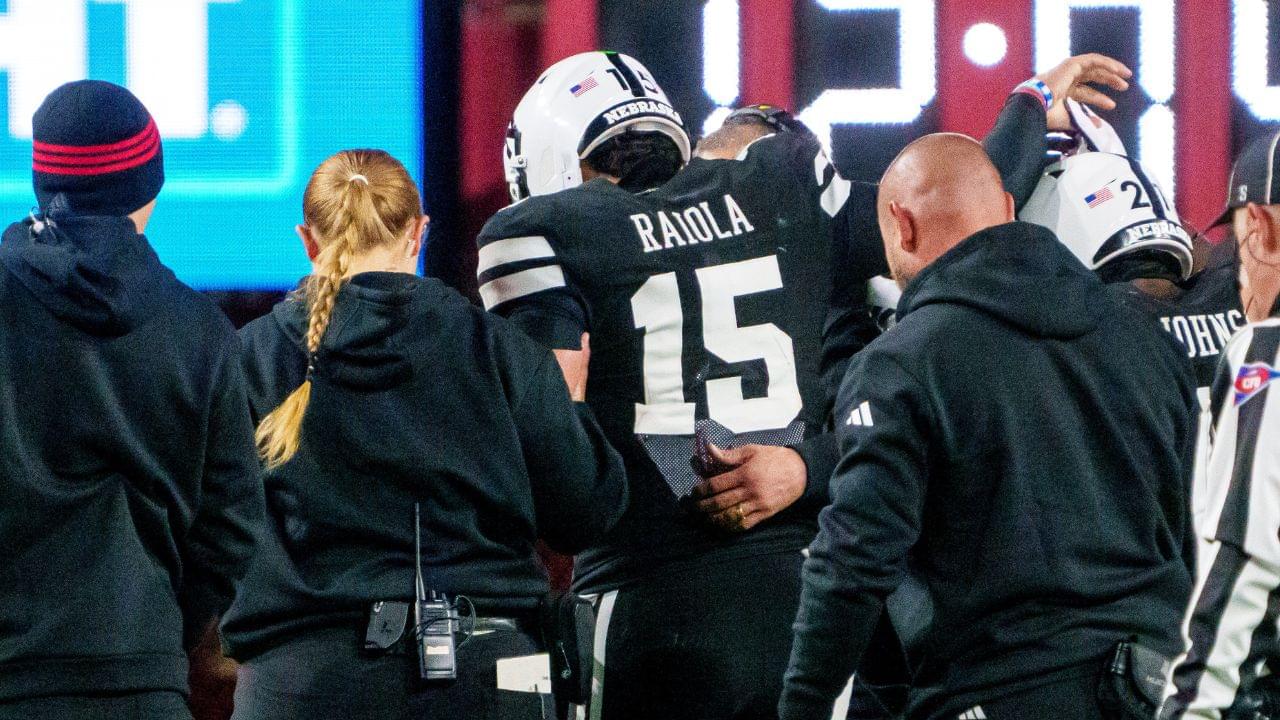
In his sophomore season, Raiola was making a mark. The career Cornhusker saw improvements in his completion percentage, yards per game average, and even his passer efficiency rating. But an untimely injury, a broken fibula, has put a halt to his progress.
As if a season-ending injury wasn’t bad enough, the incident also comes at a time when Raiola’s NIL valuations were beginning to plummet. According to On3, he entered his sophomore season with $3 million in NIL dealings. And two weeks into November, his total valuation has plummeted to $1.8 million.
Nearly 50% of the value on Raiola has been wiped out, making his NIL portfolio one of the biggest losers of the 2025 college football season. The only other comparable slide this year is that of the Texas Longhorns’ Arch Manning.
The latest representative of football’s royal family sported a NIL benchmark total of $6.8 million before opening day. And even though he’s coming off a win at home against the Arkansas Razorbacks, he’s only managed to retain $3.6 million.
There’s also the factor brought in by Raiola’s brother, Dayton, who recently made headlines by decommitting from Nebraska. Naturally, that’s led to the belief that the quarterback has likely played his final game in the Big Ten.
Even though Raiola was able to show us some convincing signs of improvement, the 20-year-old’s time in Nebraska may still be viewed as a failure due to the amount of cash that was lost. It’s a perfect example of how the narrative behind the profits, or lack thereof, is beginning to take precedence over the narrative of the player’s growth and experience in the NIL era.
As money continues to flood into college sports, more and more investors or “donors” are going to get burned. Ever since the floodgates of name, image, and likeness were opened, the annual cost to field a relevant program has steadily increased, and there seems to be no end in sight for that trend.
While it’s certainly great that players are now seeing their share of the revenue, it’s also disheartening to see the game of football slowly transform into more of a corporation rather than a league or a sport that has balanced the budget between dollars and loyalty.
It is evident that until something better or government oversight and regulations come along, we’ll have to continue to see student athletes being treated as stocks rather than athletes or human beings.