Anyone who has tried throwing a football knows it’s not easy. It’s actually extremely difficult. And if you don’t understand the physics behind throwing a football, especially aerodynamics and rotational stability, the ball will wobble or flutter instead of coming out as a tight spiral.
Advertisement
A good throw, or a perfect one like a tight spiral, from a QB comes from angular spin around the axis of the ball. Everything could affect this throw, from air inside the ball to the laces outside of it. Yes, the laces can disturb the airflow as well. But how much, you ask?
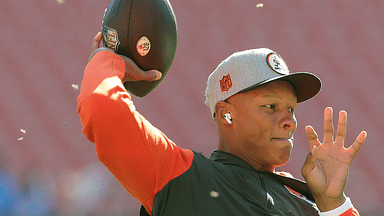
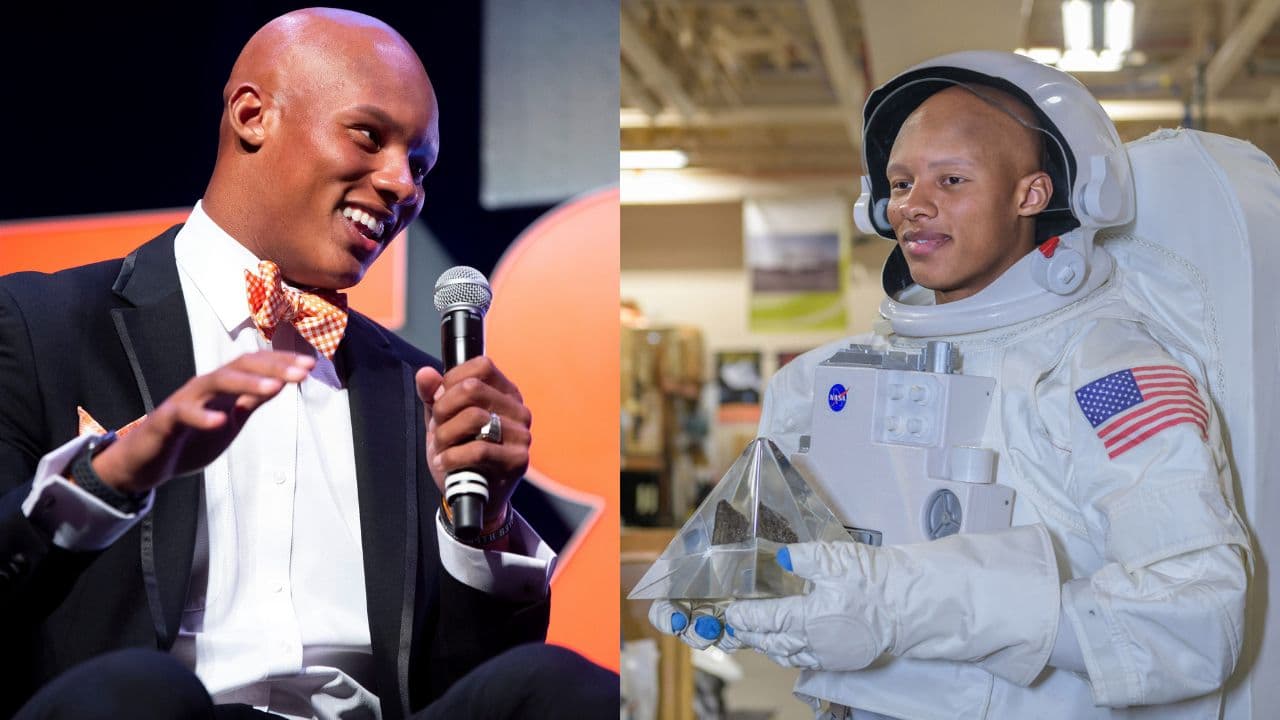
Well, Josh Dobbs, who’s a backup NFL QB with 15 starts and a bachelor’s degree in aerospace engineering from University of Tennessee, has the answer. His answer is well-researched too, as he did research on it for a project in school.
“I actually had to do a project on it in school… Just talking about, do the laces affect the ball as it rotates through the air,” Dobbs began, adding,
“And what I deduced was that, No, it doesn’t really affect the ball as it goes through the air. The laces create a nice little boundary layer, which allows it to cut through the air a little bit better. But shape, kind of really plays the biggest part in that. The laces… they allow more grip friction for the quarterback to rip it, spin the ball through the air, and that, ultimately, allows the ball to fly further, and faster and tighter.”
If you’re wondering what a “boundary layer” is, it’s a thin layer of air around a moving ball that helps it cut through the air more easily. Dobbs added that without the laces, throwing the ball, or ripping it, would be “a little slicker, kind of like a rugby ball.” According to him, the laces also help QBs be more accurate.
View this post on Instagram
Dobbs is actually factually correct with his assessment here, which isn’t very surprising. If you didn’t know, this guy interned two times at the NASA. He isn’t just called “The Passtronaut” by his fans.
Notably, Dobbs was asked to explain the aerodynamics around the ball by the journalist after the GOAT of football, Tom Brady, himself did so last month. During the Wild Card game between the San Francisco 49ers and the Philadelphia Eagles, Brady explained that the “plane” or orientation of the football’s point is a critical factor for maintaining accuracy against wind resistance.
So that the ball doesn’t go off course, Brady explained that the point of the football must stay on a neutral plane, which means pointing straight ahead or slightly down. What if the ball is tilted upward? Well, the wind friction hits the underside of the ball and pushes it up, leading to “flutter” or loss of velocity.
This is awesome: The legendary Tom Brady breaks down how QBs adjust their mechanics when playing in windy conditions.
This is a MUST-WATCH for every NFL fan. pic.twitter.com/Cvx8MGzK9A
— Dov Kleiman (@NFL_DovKleiman) January 12, 2026
It’s quite nice that these quarterbacks can give us these tidbits, as it helps us better understand the art of throwing a football.