
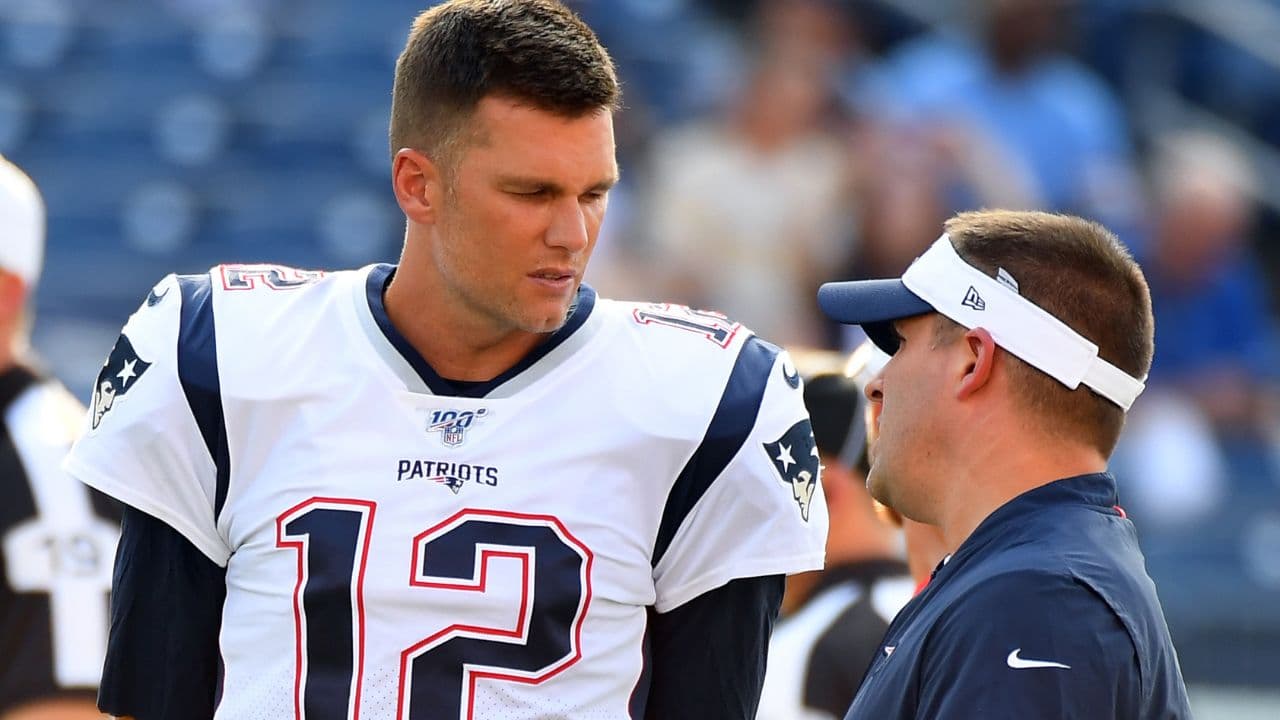
Before a Super Bowl, nerves are inevitable for the players because the stakes are massive and the margin for error is razor-thin. Even the most seasoned players feel nervous and overthink the night before the Big Game. Even Tom Brady, who had 10 Super Bowl appearances by the time he was done, felt it each time.
Advertisement
However, the Patriots legend, who won seven rings, had his secret weapon: He knew how to channel his anxiety into productivity. That also entailed a willingness to push oneself with the finer details of preparations, even if it meant poring over tape mere hours before the game.
Brady peeled back the curtain on how one late-night conversation with OC Josh McDaniels before Super Bowl XLIX in February 2015 reshaped the Patriots’ offensive plan against the Seahawks’ feared Legion of Boom defense. Brady began by explaining McDaniels’ overarching philosophy heading into Super Bowls: Cut the flab, and keep things simple.
“You have 60 to 70 plays left in the entire season. That’s all you got,” Brady said on The Herd with Colin Cowherd. “So why have 300 calls on the call sheet? You’re not gonna call them all anyway.”
Instead, McDaniels believed in trimming the offense down to its most executable ideas. This meant retaining those plays that the team trusted and could run cleanly under pressure.
“Why don’t you try to just thin it out to the places that you feel give you the best chance to win?” Brady recalled. This approach set the stage for what happened in the days leading up to the game.
Before the Seahawks clash, the Patriots practiced four days in Foxborough, then three more in Arizona. Seven practices in total. On paper, everything was put in place. But something still didn’t sit right with Brady, especially in the red zone.
“It’s Friday night after we’ve had seven practices,” recalled Brady. After dinner with his family, around 9:30 p.m., that feeling started hitting him harder. “I’m walking from the parking lot up to my hotel room… and I called Josh,” continued Brady.
“I’m not feeling great about the red area,” he told McDaniels, before adding, “If I look to the right, the defense is gonna move to the right… If I look to the left, they’re all gonna move. I don’t think we can gain any leverage.”
Against Seattle’s scary discipline and speed, Brady felt his eyes alone would provide answers to the defense. So he asked his OC one simple question: “Can we just go through the plan one more time?”
That call led to a late-night film session from 10 to 11 p.m., where Brady and McDaniels created new red-zone plays. “We came up with about three or four plays on that Friday night,” Brady said.
Those plays were installed the very next morning, on Saturday, the day before the Super Bowl. “That one particular play you just showed… was one of the plays that we installed on the Saturday morning,” Brady revealed to Colin Cowherd.
There was an element of risk, though, since they had no time to practice and build chemistry with the players on these plays. But as it turned out, the duo’s dare paid off. “We threw touchdown passes on two of the plays that we installed on that Saturday morning,” he revealed.
These details matter because Super Bowl XLIX came down to inches and seconds. Brady finished with a then-record 328 passing yards and four touchdowns, leading a 10-point fourth-quarter comeback. The Patriots won 28-24, reclaiming the Lombardi Trophy in one of the most dramatic Super Bowls ever played.
For Brady, the lesson was simple: “You could be prepared, and then you can go to the next level. Cross every T, dot every I,” he said.