


“Seagram computer adjudged Michael Jordan as the NBA MVP in his rookie year”: How Bulls legend has always been a favorite of computer algorithms

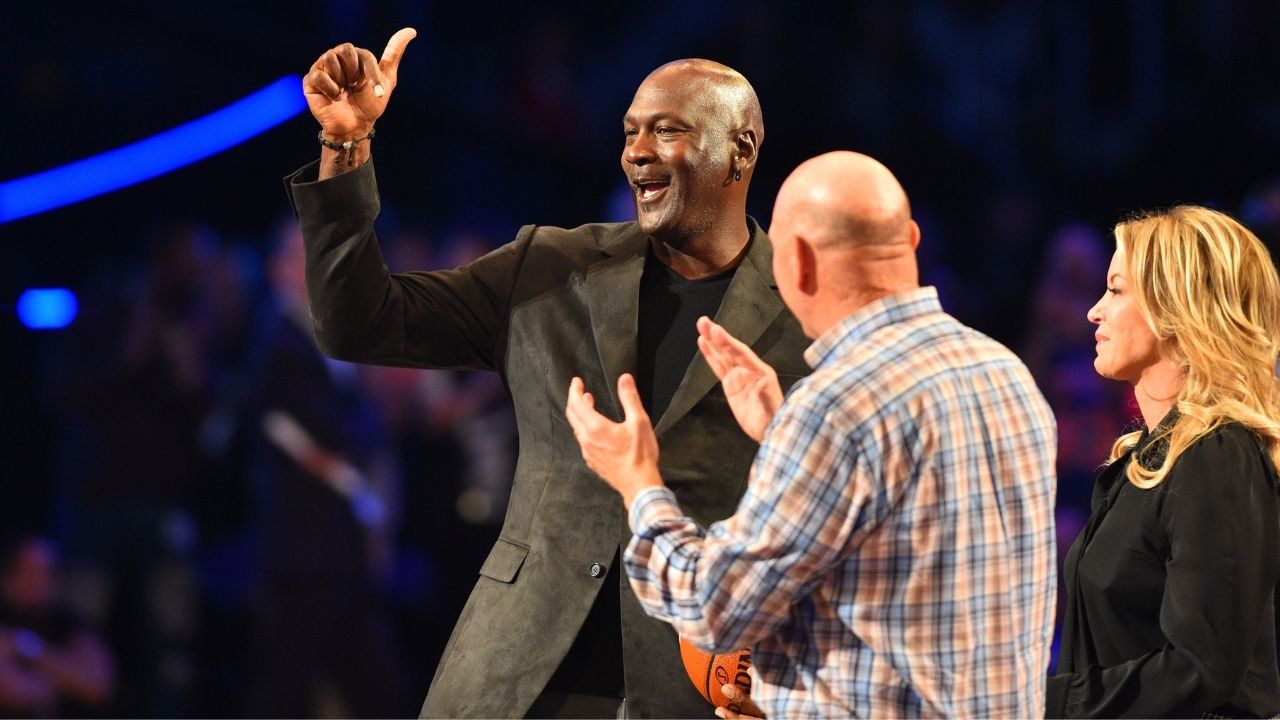
The NBA awarded Michael Jordan his first MVP trophy in 1987-88. But computers had already foreseen the storm coming everyone’s way.
Jordan was the league’s top scorer by volume in every one of his 11 full seasons with the Bulls. It is understandable that he was adjudged as the league MVP in his 4th season. But many believe that he was already the best player before that.
Canadian alcoholic drink company Seagram had devised a computer algorithm to adjudge the NBA’s best player. They’d been doling out these awards since the 1970s – they also included the ABA in their results.
In the year 1974, Julius Erving, the ABA MVP, beat out Kareem Abdul-Jabbar for this Seagram award. He received a lump sum of $10,000 from the alcoholic beverage manufacturers.
Michael Jordan was adjudged NBA MVP by Seagram in 1984-85
That same Seagram computer hopped on the MJ bandwagon remarkably early. In 1985, Jordan won Rookie of the Year, made the All-Star team, and ranked sixth in the MVP race. This was his only full season with the Bulls that he did not rank among the top 5 in the race.
Seagram’s algorithm, however, thought differently. It spit out Michael Jordan as its choice for league MVP. An embarrassed Jordan would state this:
“I can’t compare myself to Larry Bird, I still feel he’s the best in the league. I guess I can say computer-wise I beat out Bird.”
People watching the NBA understood that even a very young Michael Jordan ranked among the best NBA players, but a computer algorithm formulated by Seagram, the fuckin ginger ale company, ran the numbers and was like NO HE’S *THE* BEST PLAYER. RIGHT NOW https://t.co/4RuTX42mPc
— Seth Rosenthal (@seth_rosenthal) March 8, 2021
Jordan was also named the NBA’s MVP in 1986-87, when he averaged a whopping 37 points per game for the Bulls. He finished a distant second to Magic Johnson in the real MVP race, though he got 10 first-place votes.
This is a clear indication that Seagram had elaborately developed a technique that allowed them to predict the league’s best player with a good degree of certainty in an age that preceded modern data science and machine learning algorithms.
About the author


-

Kris Johnson •
Jaylen Brown Blasts Refs for Having an ‘Agenda’ & Calls Out Joel Embiid for Flopping
-

Adam Roarty •
New York’s Record-Breaking Closeout Signals Strategic Shift in Eastern Conference Power
-
Adam Roarty •
The NBA’s New Anti-Tanking Lottery Reform Is Already Dividing Fans
-

Adam Roarty •
Trump Becomes First President To Attend NBA Finals, But Not Everyone Was Pleased
-

Adam Roarty •
Giannis Trade Watch: 10 Teams to Monitor Before the Draft
-

Terrence Jordan •
“F That”: Shannon Sharpe Reacts to Iman Shumpert’s Controversial Take on Bam Adebayo’s 83