


What Happens to a NASCAR Car After the Race?

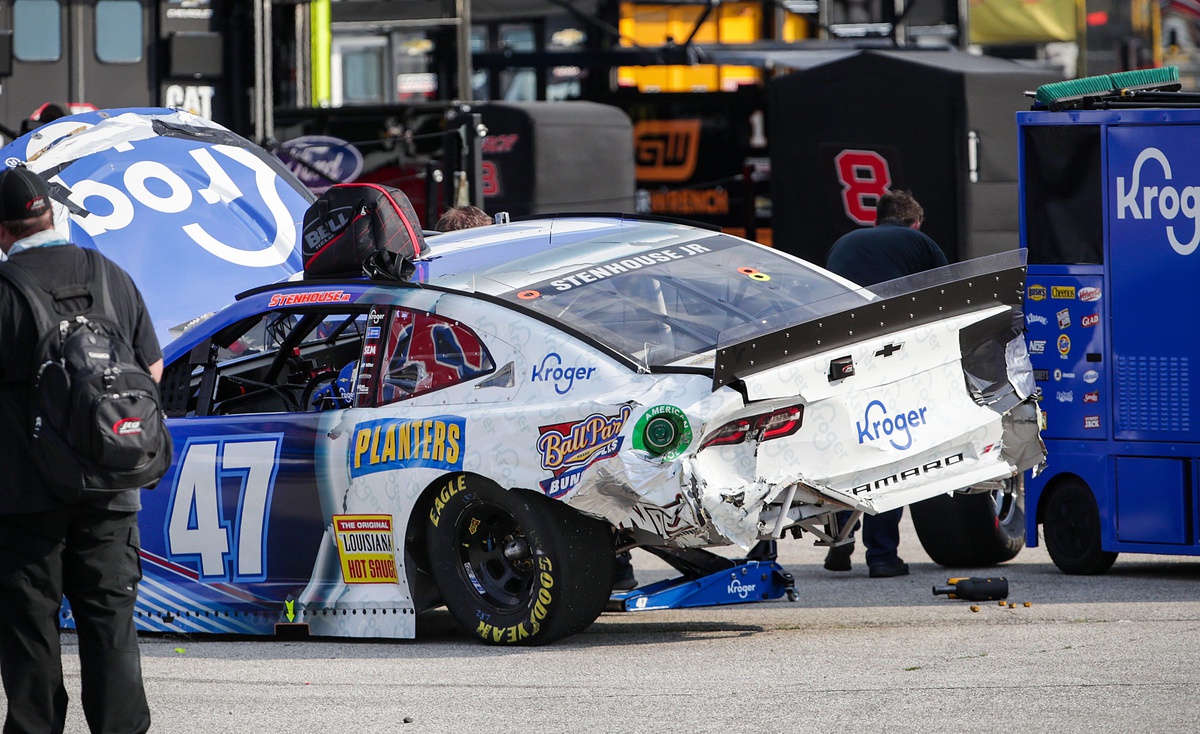
Every weekend during the racing season we see machines weighing over 3000 pounds break speeding barriers at over 200 miles per hour. These cars are nothing short of engineering marvels in every aspect of physics. Blanketed with the names of sponsors, teams, and manufacturers they command the business dynamic of racing expertly well too. But what happens at the end of the night when they undergo a crash or their purpose on the track is served?
The social media team of Joe Gibbs Racing has given us the answer. Through a recent post, the team detailed the chain through which every car of theirs goes through after a wreck suffered during a high-octane race.
According to the video, the cars that can’t make it to the finish line are the first ones that get looked at. Their body panels are removed and sorted based on their reusability capacities. The panels that can’t be used again are worked on and sold at the JGR gift shop or online.
The chassis undergoes thorough checks too to evaluate any potential damages. It is also mentioned that the engine is reused but only after they are shipped to the Toyota R&D center for servicing.
It is certainly interesting to see that racing, despite being known for its extravagance in hurting the environment, is completely stringent when it comes to discarding things as rubbish. Apart from being good for the planet this character also makes sense from a business perspective considering the cost that it takes to make these cars.
Reasons for the love for recycling in NASCAR
Reusing car parts is a common method of approach that every team in NASCAR employs. Chad Knaus, the Vice President of Competition at Hendrick Motorsports, said a few years ago, “We don’t get rid of a lot of cars. A car has to be pretty bad if we say it’s a ‘do not resuscitate.’ We send everything out to be recycled. You won’t find anything in the garbage can.”
Teams like Hendrick Motorsports and Joe Gibbs Racing have their damaged cars sold to teams in the lower tiers or worn them down for recycling the parts. A common sight is teams very willing to combine the undamaged halves of two cars to make one working vehicle.
Moves like these not only help on the financial front but also prevent patented technology from being available in the wrong or competitor hands. Thanks to recycling, the race cars never die.
About the author

-
Neha Dwivedi •
How Do NASCAR Teams and Drivers Get Numbers Assigned for the Cars?
-
Rahul Ahluwalia •
Why Kevin Harvick Is “Super Concerned” About Ross Chastain
-

Rahul Ahluwalia •
“Country Needs to Unite Against…” NASCAR Executives Slammed After Dodgy Defense of Playoff Format
-

Neha Dwivedi •
Dale Earnhardt Jr. and Kyle Petty Hate Denny Hamlin Being Too Humble About His Record
-

Gowtham Ramalingam •
Ross Chastain’s Bizarre Fan Interaction After Charlotte Win Uncovers One of His Victory Rituals: ”Means a Lot to Me”
-

Neha Dwivedi •
Denny Hamlin’s Brutally Honest Feelings About Joe Gibbs Blindsiding Him With Offseason Move: “I Certainly Was Not Happy”