


NASCAR Tech Inspection: How Is the Legality of the Car Determined?

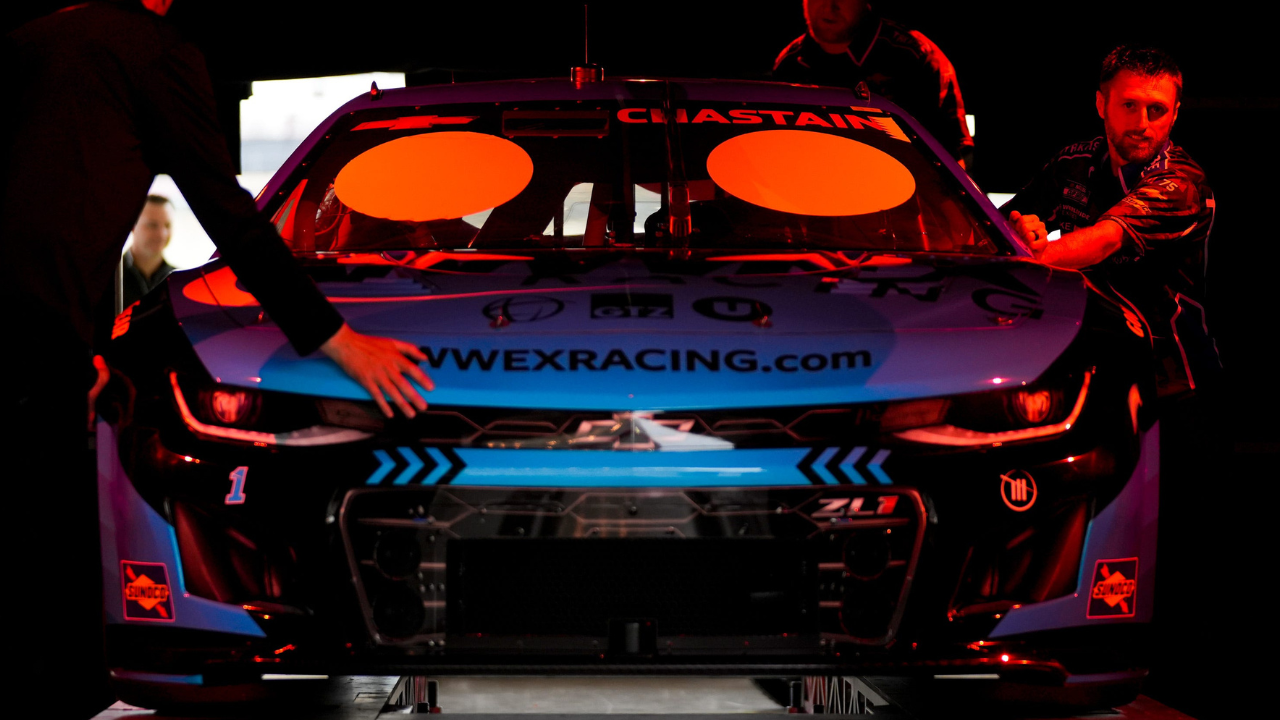
Ever since the Next-Gen car was introduced into the fray, NASCAR has become all the more stringent with its rules and inspection. But how does NASCAR determine if a car is legal or not? Well, there’s a whole lot of technology involved in that. Back in the day, templates used to be followed and if a car didn’t match that, they were deemed illegal.
In present times, the promotion uses an elaborate device known as the Optical Scanning Station (OSS). Its 16 cameras and eight projectors produce a heat map of the car which the inspectors can look at and determine a car’s legality.
The process was well explained in a recent Joe Gibbs Racing video. “Until 2018, a series of templates were used. It was pretty simple. If the car fit the template, it was legal.”
The video further explained that the older templates were fairly simple. Hence, when the teams began to utilize their creativity to get around the inspections, the templates only grew stricter. Ultimately, “in 2018, NASCAR moved to the Optical Scanning Station. Also called hawk-eye, it scans every inch of the car leaving zero room for error.”
But you don’t just pop the car inside an OSS and hope for the best. There are procedures to be followed before that. The windshields and wheels have to be covered before the scanning can begin. Additionally, certain colors on the racecar also affect the procedure.
At times some of the paint work needs to be covered with a special type of spray. As per a report, the OSS uses 157,000 laser beams in 30 seconds to give an accurate heat map of the car so there can be no overly reflective surfaces.
NASCAR’s legality test deals with the finest margins
In an earlier JGR video, one of the team members revealed the room for error in NASCAR’s pre-determined CAD model was only 150,000 of an inch. Words cannot describe how tiny that is. It wouldn’t be surprising if multiple cars failed the legality test every single weekend. If a car is found to be illegal, the whole team has to go back to the garage and make the car fit NASCAR’s parameters.
“It (OSS) scans the entire body surface of the car and then spits out an image that shows you how close you are to the CAD model of the body. It lets us be plus or minus a 150,000 of an inch in any section of the body. If we’re shallower than a 150,000 on any section or more proud of the CAD surface on any spot, we are deemed illegal. We have to fix that and then go through tech again,” the JGR mechanic explained.
Several drivers and teams have been victims of NASCAR’s incredibly strict rules of late and while there have been some protests against them, these rules are here to stay.
About the author


-
Neha Dwivedi •
‘Unfortunately, We Haven’t Executed’: Tyler Reddick’s Honest Admission After Disappointing Regular Season
-
Gowtham Ramalingam •
Carl Edwards’ Failed Video Game Move To Beat Jimmie Johnson At Kansas Revisited
-

Neha Dwivedi •
“We Didn’t Celebrate Birthdays or Anniversaries”: Richard Petty Reveals Why Christmas Was a Big Deal for the Petty Family
-

Neha Dwivedi •
“You Should Be Proud”: Kenny Wallace Reminded by Fans About Real Contribution to NASCAR After Heartfelt Post on Career
-
Srijan Mandal •
The Change in Bubba Wallace’s Lifestyle That May Have Helped Him to Reach the NASCAR Playoffs
-
Shaharyar •
Dale Earnhardt Jr. Snubs Elon Musk’s $20 Billion Worth Social Media Platform Over the One Worth $120 Billion