


NASCAR Tech Inspection: How Does the Process Work?

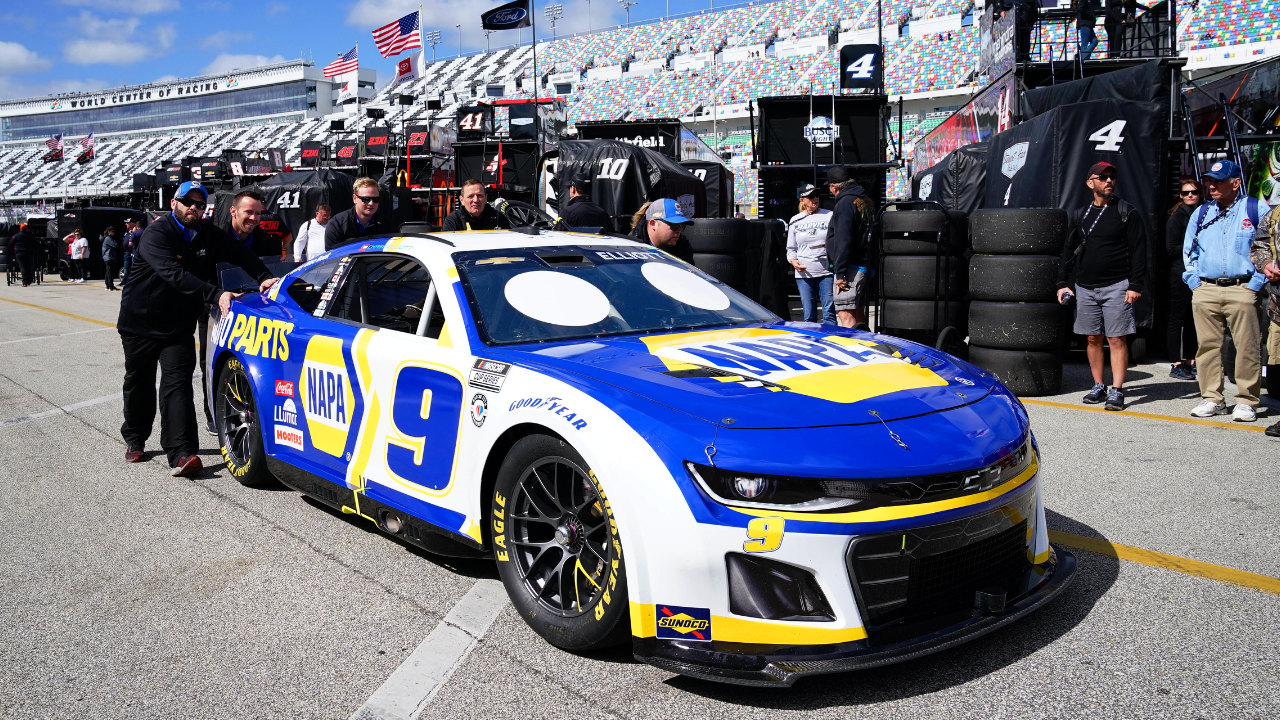
NASCAR has extremely strict standards when it comes to ensuring that the field is even for every car out there. One of the many ways that NASCAR ensures that is by the help of the Optical Scanning Station or OSS, which scans every car before each race to check if it meets the permissible standards. But how lenient is the governing body while scanning the cars? And how does the scanning device work?
As a recent Joe Gibbs Racing video explained, “It (OSS) scans the entire body surface of the car and then spits out an image that shows you how close you are to the CAD model of the body. It lets us be plus or minus a 150,000 of an inch in any section of the body. If we’re shallower than a 150,000 on any section or more proud of the CAD surface on any spot, we are deemed illegal. We have to fix that and then go through tech again.”
Multiple failures to pass the pre-race scan might result in severe punishments, such as sending a crew member out of a race or a heavy monetary fine. Other penalties can also be hurled at the teams depending on the nature and magnitude of the failure.
The scanning stations have 16 cameras and eight projectors that form a three-dimensional heat map of the car. If it’s green, the team is good to go. If not, they need to check what went wrong.
Needless to say, staying under the radar is extremely difficult.
This is how the cars go through the NASCAR inspection process
Even after a failure in any one of them, each car and to go through five stations of inspection every time. Let’s take a detailed look at how that works.
Station 1- Right after coming out of their respective haulers, the cars are pushed to the chassis platform in station 1. Here the car is lifted and all of the inside, underneath the splitter and nose of the car, are inspected.
Stations 2 & 3- A generic template is put on the car and the body of the car is inspected according to that template. Then, the cars are inspected for their height and weight.
Station 4- This is where the OSS actually starts working. The OSS scans for the chassis and the entire body of the car at the same time. The OSS creates a 3D heat image of the car and compares it to a computer-aided drawing for each manufacturer. Once that is done, the OSS will generate a sheet with a number and a color; if the color is green, it means ‘pass’ and if it’s red; it means ‘fail’.
Station 5- In the fifth and final station, the pieces of equipment that had been used to elevate the car at a height are all taken out and a final round of inspection is done. It usually takes three hours to get all the cars through this entire inspection process, but that time might differ in the number of failures. However, post-COVID-19 protocols allow only five hours for the entire inspection.
About the author


-
Neha Dwivedi •
“Those Days Are Gone”: Kevin Harvick Doubles Down on Controversial NASCAR Take
-
Neha Dwivedi •
Joey Logano Gives a Crash Course on the Biggest Challenges Behind Running the Coca-Cola 600
-
Rahul Ahluwalia •
Leigh Diffey’s Dream to Call the Daytona 500 Faces Just One Huge Barrier
-

Neha Dwivedi •
Ty Gibbs’ Playoff Hopes Collapse After Disastrous Richmond Outing
-

Neha Dwivedi •
“NASCAR is Not Having Fun”: Are There Any Buyers for the Series If the Trial Goes the Other Way?
-

Somin Bhattacharjee •
“They spent every single dime on me and Jarit on racing”: Jimmie Johnson opens up about the sacrifices his parents made to kickstart his racing career