


Are F1 Helmets Really Bulletproof? Ex-Driver Tests at a Shooting Range

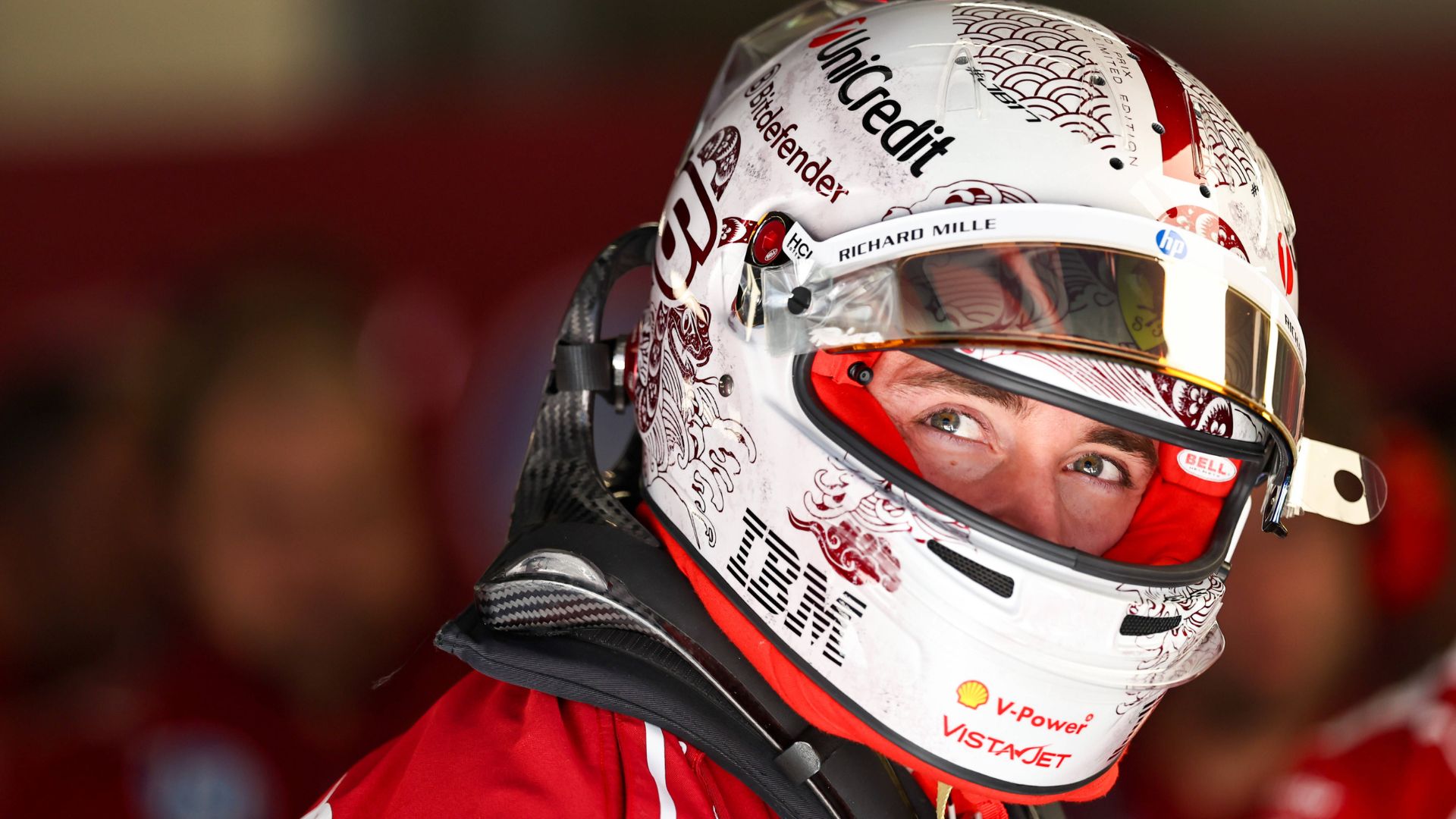
Driver safety in Formula 1 has grown leaps and bounds over the sport’s 75-year history. Ayrton Senna’s tragic death at Imola in 1994 was the catalyst for this movement, but with each passing year, the FIA and F1 have taken meaningful steps to prevent any type of driver injury or fatality.
One of the biggest pieces of armor that an F1 driver dons is their crash helmet. Modern F1 helmets are fitted with a carbon composite known as Advanced Ballistic Protection (ABP). But is an F1 crash helmet really bulletproof?
Former racing driver and founder of Driver61, Scott Mansell took this theory to test. He put three helmets to test: a normal bike helmet from Amazon, a non-ABP racing helmet, and an F1 helmet. And the results were astounding.
Both, the cheap helmet and the non-ABP helmet saw the bullet pierce through its frame and make impact with the driver’s head (a silicon prototype). On the other hand, the ABP-laced F1 helmet was battle-hardened.
The F1 helmet withstood a single shot to itself and multiple close-range shotgun attempts—without any penetration or significant structural damage. That said, this test did expose one flaw with the helmet design.
View this post on Instagram
While the helmet’s upper structure took the brunt of the bullets and simply ricocheted it off, the visor was very flimsy. In fact, when aimed at the visor, the bullet did pierce its outer form and made an impact with the silicon driver head.
Rest assured, this will never be cause for concern in real life.
Why are F1 helmets bulletproof?
Lacing an F1 helmet with ABP isn’t to protect the likes of Lewis Hamilton and Max Verstappen from actual shooting attempts. In reality, the ABP layer is an additional protection element that ensures the structural integrity of the helmet in cases of massive loads and forces.
While a bullet may never come face-to-face with an F1 driver during sessions, other projectiles at similar speeds might. For instance, flying debris and gravel could easily enter the structure of the helmets that aren’t coated with the specialized ABP material.
The sport learned this the hard way during the 2009 Hungarian GP. Ferrari’s Felipe Massa was struck by an errant spring coming off of the Brawn GP car of Rubens Barrichello. This piece of debris penetrated Massa’s helmet, fracturing his skull and knocking him unconscious.
The Ferrari driver subsequently hit the barriers and was placed into an induced coma for two days. The Brazilian missed the remaining rounds of the championship, after this near-fatal incident but returned the very next season.
About the author


-
Tanish Chachra •
“Maybe one day”- Ferrari driver unveils disappointment on Instagram after getting snubbed for F1 with Guanyu Zhou to Alfa Romeo announcement
-

Nischay Rathore •
Red Bull Boss Denies the Rumours of Netflix Producing a Show on Christian Horner and Wife Geri Halliwell
-

Srijon Jana •
“Doesn’t Do Politics:” Christian Horner Reveals Why Max Verstappen Is Not Difficult to Work With at All
-
Subham Jindal •
“His name is George Russell and not Max Verstappen” – Mercedes decide partner to Lewis Hamilton for the 2022 season
-
Tanish Chachra •
“Flying on Monday or Tuesday to America to attend a gala”– Max Verstappen remarks hypocrisy over Monza walkaway; claims he knew Lewis Hamilton was fine
-
Tejas Venkatesh •
Pirelli faces a “cold” and herculean challenge ahead of 1st Las Vegas GP