


Zak Brown Reveals How McLaren Uses ‘Bogus Questions’ on Team Radio to Bluff Rivals Into Making Mistakes

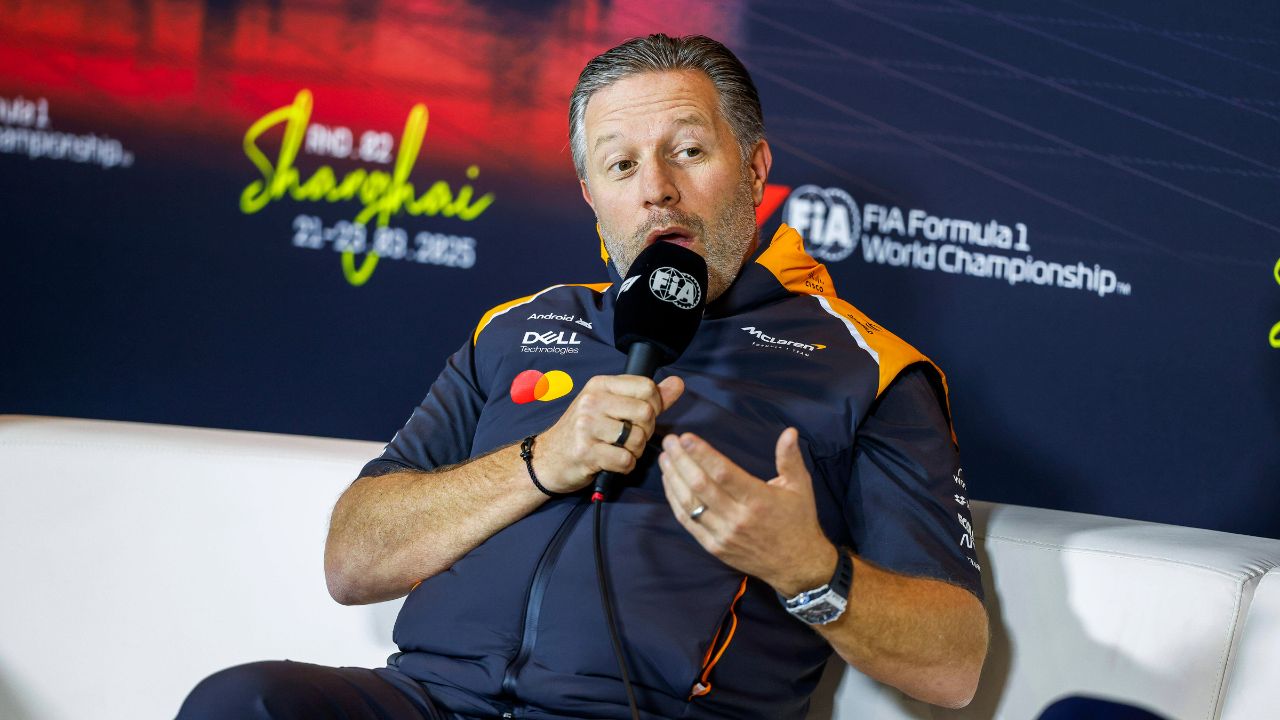
Winning the Constructors’ title in F1 is far more complex than simply having the two fastest drivers on the grid in the quickest cars. It’s about team management, having a crew that works like clockwork, and above all, executing a flawless strategy.
Before the start of a Grand Prix, hours are spent devising the perfect plan to help a driver finish as high up the order as possible. Tire choices and the number of pit stops are crucial factors that can determine the difference between winning and losing.
At the same time, rival teams keep a close eye on each other, looking to counter strategies—or, in McLaren’s case, use confusion as a weapon. Zak Brown, CEO of the Woking-based squad, recently admitted his team asks ‘fake questions’ to their drivers on the team radio during races.
Obviously, it isn’t to confuse their drivers, Lando Norris and Oscar Piastri. They know what their race engineers are doing. So why do they do it? To simply force others on the grid to make mistakes that would give them an advantage.
“If we say to Oscar, ‘Oscar, how are your tires?’ That could be a, that is a real question. If we say to Oscar, ‘Anything we say after tires, if we say anything it’s a bogus question,'” Brown said to Bloomberg.
Brown simplified it by giving an actual example. If Tom Stallard, Piastri’s race engineer, ever asks him, ‘How are your tires doing?’, the team doesn’t really care how they are doing. And in return, they expect the Melbourne-born driver to give a ‘fake answer’.
“So all our competitors, who are trying to figure out when we might make a pit-stop, are thrown off…” These tactics may seem small and relatively insignificant, but on tracks where either the overcut or undercut strategy works wonders, or where overtaking is difficult, pit-stop timing is of paramount importance.
That said, this may not always work. Teams know that rivals try to trick them into making wrong decisions, and the fact that Brown openly admitted to this further suggests the same.
At the end of the day, it all boils down to who can outwit the other. That’s where counter-strategies—where teams do something different from what they plan or say on the team radio—come into play. Not quite just 20 cars racing around and the fastest winning, is it?
About the author


-
Tanish Chachra •
“For $100,000 I’ll put your face on the engine cover”– IndyCar driver flabbergasted with exorbitant ticket price of Las Vegas GP
-
Aishwary Gaonkar •
Mercedes Failed Itself Despite Creating a Ruckus Over Their Biggest Problem
-
Subham Jindal •
“Pierre Gasly is not going to be with AlphaTauri next season” – Paul di Resta drops bomb, but Nico Rosberg is unimpressed
-
Veerendra Vikram Singh •
Daniel Ricciardo Once Revealed Why His F1 Job Is Keeping Him Away From Having a Family
-
Janmeyjay Shukla •
“It is always about the teamwork”: NFL superstar Tom Brady wishes all the best to Sebastian Vettel and Aston Martin ahead of AMR22 reveal as he helps to launch the new age car
-
Utkarsh Bhatla •
Jean Eric Vergne approached by F1 team for 2019 season