


How NASCAR Has Tightened Up Its Rulebook This Year to Prevent Race Manipulation Antics Akin to 2024 Martinsville

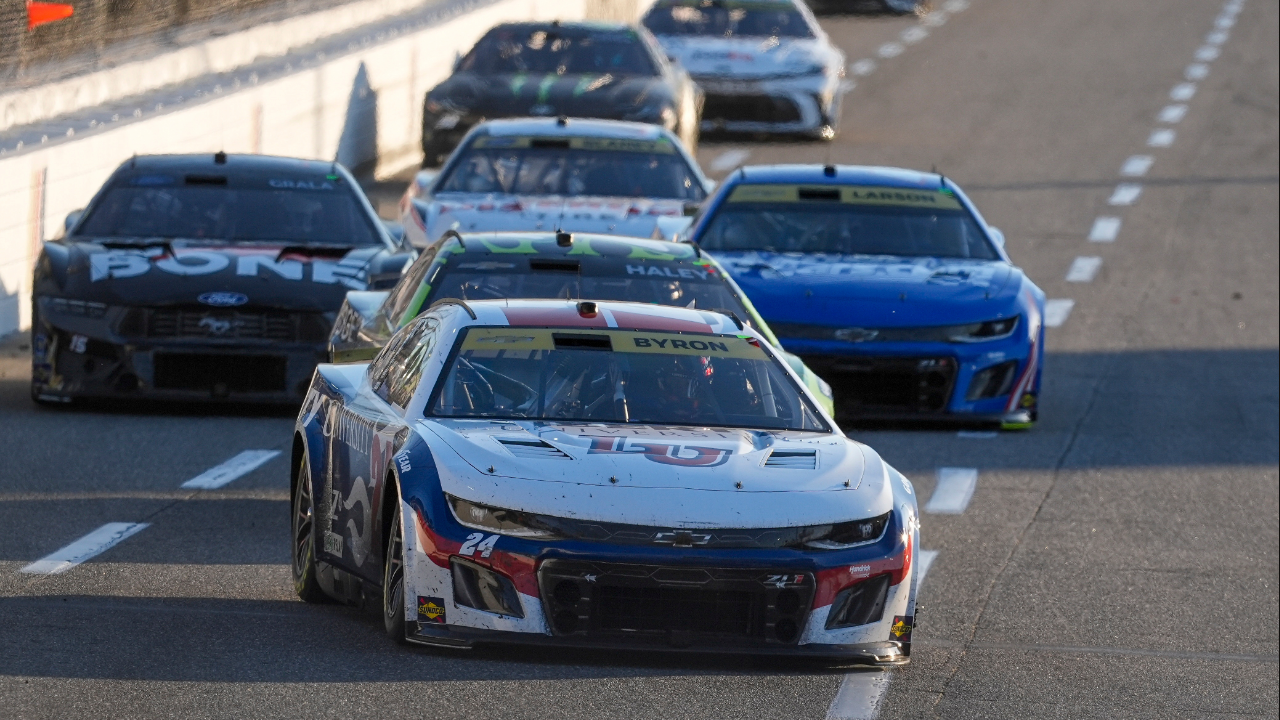
This season, NASCAR has adjusted its regulations to both broaden its appeal to international drivers and captivate a global audience, while simultaneously tightening measures against race manipulation in response to controversies from the previous year. The 2024 Martinsville race highlighted the extent of potential manipulation, with multiple drivers and manufacturers appearing to influence the race’s outcome to favor certain competitors.
In response, the latest update to the NASCAR rule book, specifically section 5.5.A, aims to clarify what constitutes an infraction. According to NASCAR, any member who attempts to improperly influence the outcome of an event or encourages, persuades, or induces others to do the same will face severe penalties, as detailed in Section 10 Violations and Disciplinary Action.
Prohibited actions now explicitly include any intentional planning or behavior that aims at objectives other than securing the best competitive result for one’s team.
The newly added Section 10.5.2.8.c outlines potential penalties for such infractions, which may include a loss of 25-50 manufacturer points, 30-60 wind-tunnel hours, 250-500 restricted computational fluid dynamics (RCFD) test runs, and 2-4 vehicle tests, among others.
Section 10.5.2.8.A of the NASCAR rule book stipulates:
“NASCAR reserves the right to determine if an OEM has violated the NASCAR Rule Book and may impose penalties on the OEM or its representatives accordingly. The following framework serves as a general guideline for assessing OEM penalties.”
“The examples provided are illustrative and not exhaustive, offering clarity on the types and ranges of infractions that may result in penalties, should NASCAR determine enforcement is warranted.”
The discussion was sparked by events at the penultimate race of the season at Martinsville, where Bubba Wallace, Austin Dillon, and Ross Chastain were implicated in actions seemingly designed to assist their respective teammates, Christopher Bell and William Byron, in maintaining their points to secure a spot in the final four. Radio communications from Wallace and Dillon proved everything, indicating their intentions to aid the #20 and #24 drivers.
Wallace deliberately reduced his speed, allowing Bell the opportunity to overtake and secure the crucial points needed to progress, while Chastain and Dillon acted as protectors for Byron, preventing any further loss in position and helping to preserve his lead over the #24.
The conviction after a thorough review was that the orders came from the manufacturers and the teams were just following orders, thus NASCAR including language that specifically targets the OEMs for such violations moving forward.
However, the interesting part was that while Bell’s move edging onto the wall making contact and riding against it before overtaking Wallace, was deemed as the banned ‘Hail Melon’ move, Byron, who got help from the Trackhouse Racing and the RCR driver, was advanced to the round of 4 by NASCAR. This did not sit well with the fans, who said that NASCAR simply wanted a HMS car/Chevy in the final 4.
About the author


-
Gowtham Ramalingam •
“Has Given the Teams More Value”: How the Charter Lawsuit Will Impact NASCAR Teams in the Long Term
-
Neha Dwivedi •
“It’s My Life”: Kyle Larson Defends Going on Vacation After Winning NASCAR Charlotte Cup Race
-
Shaharyar •
Defending NASCAR Champion Ryan Blaney: Fords Have “Work to Do”
-
Gowtham Ramalingam •
NASCAR Fans Have a Chance to Grab Historic Hendrick Motorsports Item; Details Follow
-
Neha Dwivedi •
How Kevin Harvick’s Beef With Kyle Busch Never Died Down for A Long Period In Their Careers
-
Nilavro Ghosh •
NASCAR History: Remembering Maurice Petty, the Driving Force Behind Stock Car Racing’s Greatest