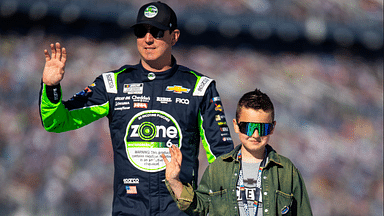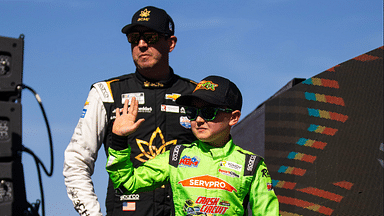
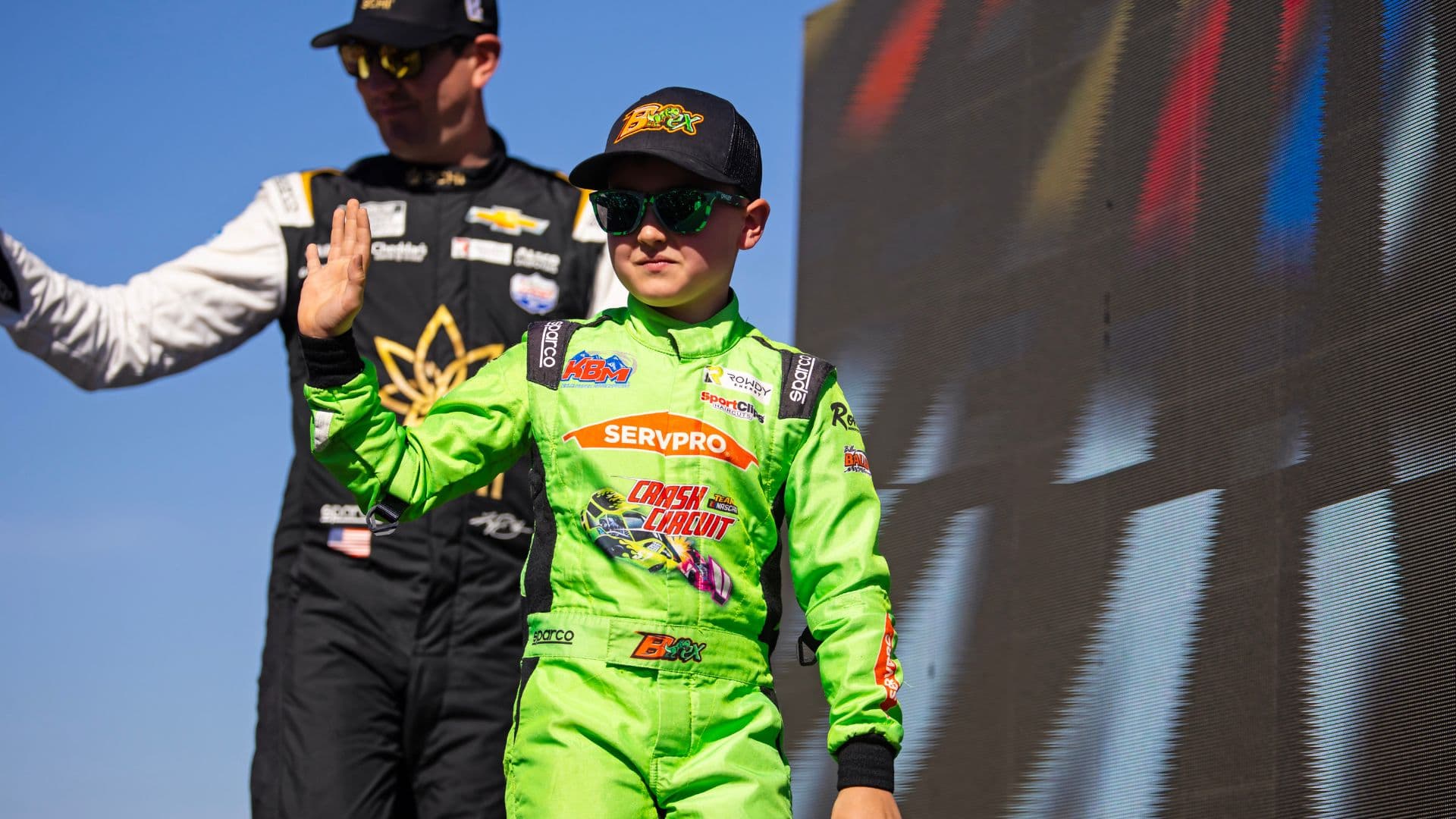
Recently, several fans took a dig at two-time NASCAR champion Kyle Busch for being tough with his son, Brexton Busch, about his racing. The criticism surfaced after Busch shared a video showing father and son seated together, reviewing the 10-year-old’s race.
Advertisement
In the clip, the elder Busch sat beside Brexton and broke down his run, offering direct feedback without softening the message. He captioned the video, “You’re slow, bro. Gotta deliver the hard truth to maximize potential.”
Some fans endorsed the method, framing it as an instruction rooted in accountability and growth. Others questioned why such exchanges were made public. But it seems the Hall of Famer and NASCAR veteran Mark Martin supports Busch’s tough love approach. Martin understands Busch’s stance that ability alone does not excuse mistakes and that progress demands confronting flaws.
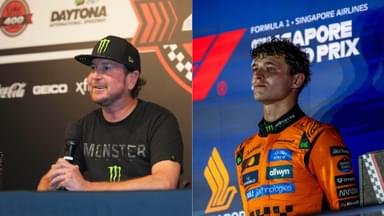
Martin reshared the video on his X account and backed Busch for refusing to soften the lesson. He wrote, “Props to @KyleBusch for being tough enough to give this lesson. And props to @brextonbusch on being tough enough to accept the lesson.” Martin went further, projecting where that mindset could lead. He added, “My prediction is with his mental toughness and a mentor like Kyle will could see a result similar to Max Verstappen.”
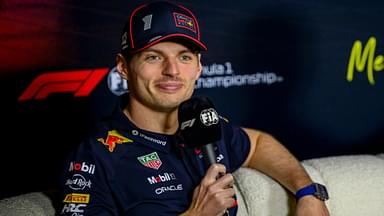
Max Verstappen is a four-time Formula One World Drivers’ Championship winner, having secured the title in four straight seasons from 2021 through 2024 with Red Bull. Across 11 seasons, Verstappen has collected 71 Grand Prix victories.
Props to @KyleBusch for being tough enough to give this lesson. And props to @brextonbusch on being tough enough to accept the lesson. My prediction is with his mental toughness and a mentor like Kyle will could see a result similar to Max Verstappen. https://t.co/aQplYrc7fR
— Mark Martin (@markmartin) February 8, 2026
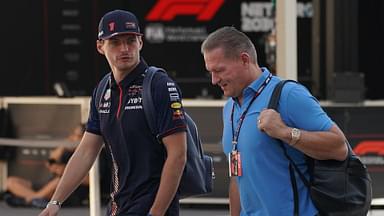
But that record, often attributed to skill and preparation, also traces back to his upbringing under his father, Jos Verstappen. Verstappen Sr. raced in Formula One but never won a Grand Prix. So he recognized his ceiling as a driver and redirected his focus toward his son’s development.
Jos Verstappen’s role in shaping Max’s career has been a big part of racing lore. Like Busch, he demanded accountability. And just like Busch, Verstappen’s stories from Max’s early years show that approach.
On one occasion, after Max crashed a go-kart, his father required him to collect every piece of the damaged kart. On another occasion, after a lost race, Jos left Max at a petrol station hours from home, only to eventually return to pick him up. Each incident was to make his son understand the role of responsibility and consequence.
And that discipline formed the foundation of Max Verstappen’s career arc. The intent was not punishment for its own sake but a structure built through direct correction. Martin sees a parallel in Busch’s approach with Brexton.
Busch has chosen to confront issues head-on, even when the lessons come with the discomfort of facing one’s mistakes. And in Martin’s view, that clarity matters. Both men recognize that development in racing often hinges on the ability to absorb critique, process failure, and return sharper the next time out.