


Paul George Lists 3 Vital Learnings about Transitioning from NCAA to NBA Basketball

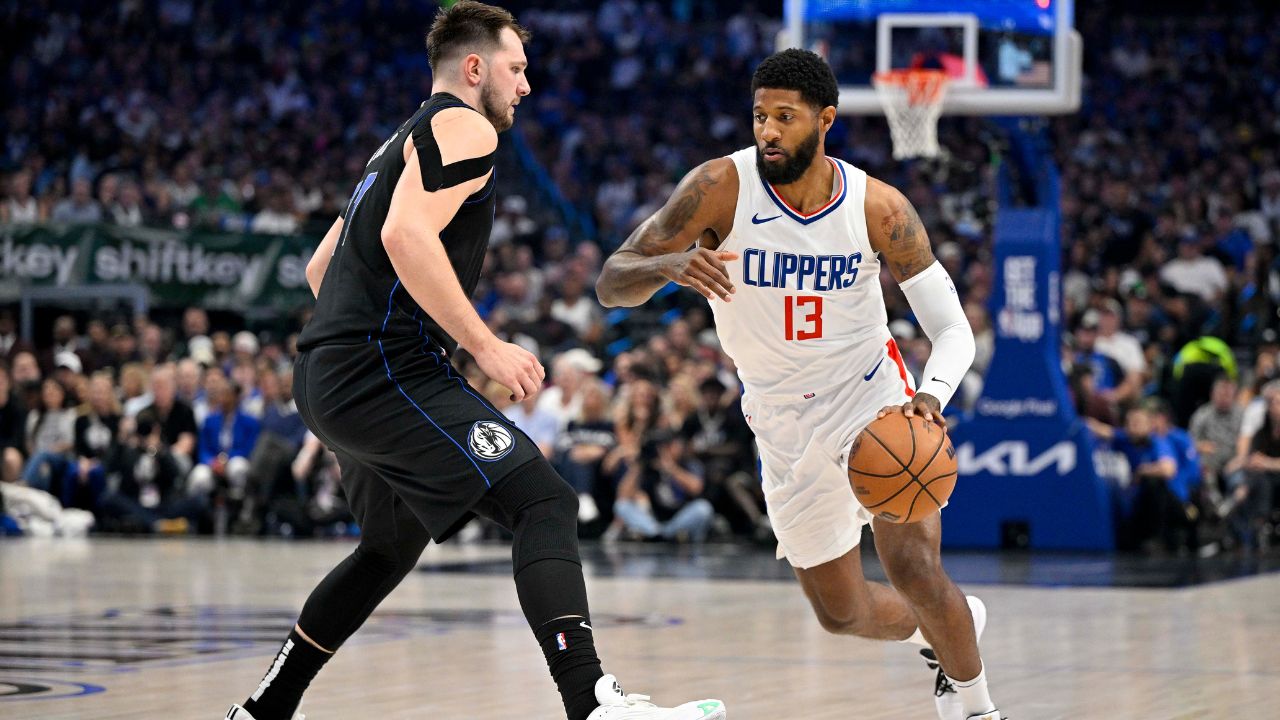
Paul George is a seasoned veteran, a future Hall of Famer, and still among the best two-way players in the league. He’s at the stage of his career where he’s expected to continue playing exceptionally well and mentor young stars who’ve grown watching him dominate on the court. The Los Angeles Clippers superstar has no issues with either, especially the latter. He showcased it by hosting Alex Sarr and Reed Sheppard on the latest episode of Podcast P.
The duo is expected to be among the top three picks in the 2024 NBA draft and ahead of their rookie seasons, George allowed them to ask questions they may have before they enter the league. Reed enquired about what he’d need to change or adapt to as he transitions from college basketball to the NBA. The Clippers superstar listed the three biggest changes the Kentucky star should be prepared to adapt to in his rookie season,
“It’s such an adjustment from college to the NBA. The pace of the game is that much different than college, where you guys are used to running through an offense, using the clock. You get what, 30-35 seconds to run a play, whereas in the NBA it’s 24 seconds, but very rarely is the offense ran down to 24 seconds.”
Paul also used the Indiana Pacers’ high-octane offense as an example to explain how fast teams in the NBA play and there’s no time to be lethargic in getting back on defense or go through the motions on offense. The six-second difference in the shot clock between college basketball and the NBA is a massive change that rookies have to adapt to. They don’t have the luxury to take their sweet time to execute a play or create separation from a defender.
Paul George then spoke about the spacing difference between the NBA and college basketball, saying,
“It’s just a lot more spacing on the floor to operate in, whether you are on offense or defense. If you are a defender, it’s more space for the offensive player to kind of make something happen.”
Paul perfectly explained how the relentless three-point shooting in the league has also opened the floor for skilled players to exploit the space their teammates create by standing beyond the arc. As a defender, it’s critical to study their defensive assignment’s tendencies with the ball in their hands to be effective and get stops.
Defending the space isn’t the only skill that rookies have to learn when they enter the league. They’re also expected to be good three-point shooters to help their teams create spacing and get buckets when needed. Paul explained,
“The non-shooter stigma kind of sticks in the NBA and it travels a long way. So I think the more you can get comfortable being that [three-point] line, the more your game will open up.”
Three-point shooting has become an essential trait, regardless of position. George himself worked hard on his shooting to become an elite offensive option. In his first four seasons in the NBA, he attempted only 4.7 three-pointers per game and shot only 36% from beyond the arc. However, in the last 10 campaigns, his three-point percentage has improved to 39% despite his attempts increasing to 7.8 per game.
George came into the league as a traditional forward but adapted to the modern NBA. He expects Reed, Sarr, and every other young hopeful to do the same to have a long and thriving career in the league.
About the author


-
Samir Mehdi •
“Devin Booker has a TS% of 78% in the clutch and ESPN keeps talking about the 9th seeded Lakers”: JJ Redick calls out the media for fixating on LeBron James and co struggling
-
Amulya Shekhar •
Is Giannis Antetokounmpo playing today vs Heat? Bucks’ injury report for Game 4 could mean ‘playoff exit’
-
Ashish Priyadarshi •
Jay-Z had some serious love for Michael Jordan’s $278 million venture
-
Amulya Shekhar •
“Shaq turned down $40 million over 5 years from Reebok”: Shaquille O’Neal describes how he made the decision to release low-cost shoes with Walmart
-
Smrutisnat Jena •
Ex-Clippers Forward Chooses Carmelo Anthony Over Kevin Durant and Kawhi Leonard
-
Mahendra Pratap Singh •
“LeBron James would have been a superstar in the ’90s”: Charles Barkley and Dominique Wilkins takes on how LeBron would have been in their era