


Bo Nix Uses Eye Black Against Buffalo Bills as Studies Discuss Its Impact on Sun Glare

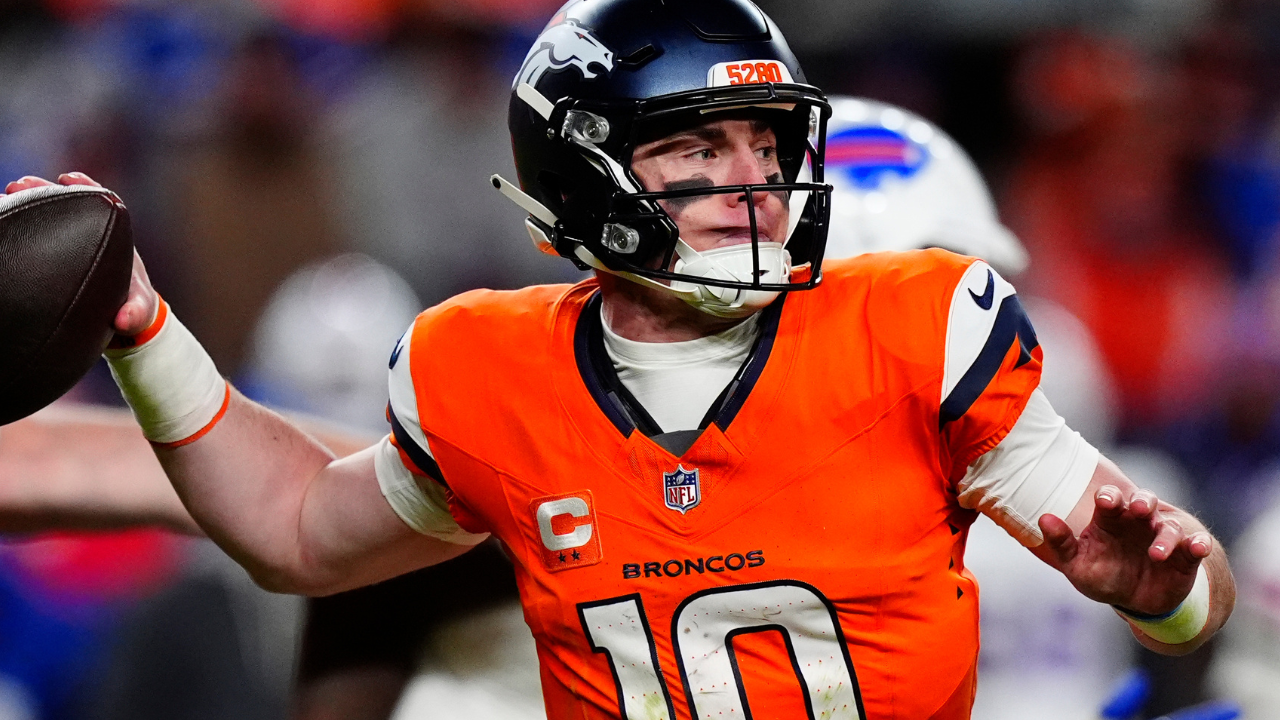
Bo Nix stepped onto the field against the Buffalo Bills with a familiar streak of black beneath his eyes, reviving a look many fans remember from his college days. While quarterbacks are usually defined by arm strength and decision-making, Nix’s choice of eye black sparked a different conversation. Does that thin layer of grease actually help an athlete see better under stadium lights and winter sun?
The roots of eye black stretch far beyond modern football. Early baseball players in the early 1900s were known to rub mud or charcoal under their eyes to fight sun glare, inspired by animals such as wolves and badgers that naturally have dark markings around their eyes.
By the 1940s, Washington running back Andy Farkas was photographed wearing eye black, helping popularize the look in the NFL. Legends like Babe Ruth reportedly used similar mixtures of beeswax and soot long before the product became commercialized.
The belief behind it is simple: the color black absorbs light rather than reflecting it, which may reduce the amount of glare bouncing into a player’s eyes. Mental Floss explains that by cutting down peripheral brightness, eye black could improve contrast and make it easier to track fast-moving objects like a spiraling football.
Players across the NFL continue to rely on it, even in the age of high-tech visors and advanced helmet designs. For some, it’s functional; for others, it’s part of the ritual of competition. Nix appeared to embrace both on Saturday night, wearing eye black as he tried to carve through Buffalo’s defense.
The effectiveness of eye black has been debated for years, and surprisingly few formal studies have examined it. The most cited research came out of Yale University in 2003. Ophthalmologist Dr. Brian M. DeBroff and his team compared three approaches: traditional eye black grease, anti-glare stickers, and petroleum jelly. Their results showed that only real eye black made from beeswax, paraffin, and carbon had any measurable benefit, slightly improving contrast sensitivity and reducing glare.
“We were surprised to find a benefit from the grease,” DeBroff later told The New York Times, admitting he initially expected the product to be more psychological than practical.
Two years later, a study from the University of New Hampshire challenged those findings. Using a larger sample size and more controlled lighting conditions, researchers reported no significant difference between athletes who wore eye black and those who wore nothing at all. Since then, little new research has been conducted, leaving the debate unresolved.
Today, many players opt for stick-on eye black strips, which are cleaner and easier to apply. Some athletes swear it sharpens their vision in bright conditions; others admit it’s more about confidence, intimidation, or superstition.
Against Buffalo’s fierce pass rush, any edge, real or perceived, matters. Eye black may not transform a quarterback into an MVP, but in a game decided by inches and split-second reads, even the possibility of clearer vision is enough reason for many players to keep the tradition alive.
About the author


-

Kris Johnson •
Cardinals Take Cautious Approach With Carson Beck’s Rib Injury
-

Kris Johnson •
George Kittle Targets Practice Return Before 49ers’ Week 1 Opener
-
Kris Johnson •
Andy Reid Puts Patrick Mahomes on Track to Return for Chiefs’ Season Opener
-
Kris Johnson •
Ex-Buffalo Safety Jordan Poyer Questions Jalen Hurts’ Late-Game Comeback Ability
-

Kris Johnson •
Nick Caserio on NFL-to-College Returns: ‘It’s Ridiculous’
-

Adam Roarty •
Harrison Smith Turns a Vikings Sendoff Into a 15th Season