


“It’s Just Pro Football Now”: Julian Edelman and Josh Duhamel Detail How NIL Hurts Small Schools Like NDSU

Name, Image, Likeness. Things that any youngster is obsessed with, right? But in the context of college football, NIL has radically transformed the landscape. Student-athletes are no longer tied to one program; they now have the financial freedom to take control of their careers and switch schools when they see fit.
But with little regulation or oversight around NIL, controversy was inevitable. The situation involving Nico Iamaleava is a prime example of how murky things have become. The once-clear line between amateur and professional athletics is now blurry.
While these changes have undeniably benefited players, they’ve also created serious challenges, especially for smaller programs. The NIL era has supercharged the recruiting power of powerhouse schools, allowing them to throw money at top high school prospects and poach rising stars from lower-tier programs.
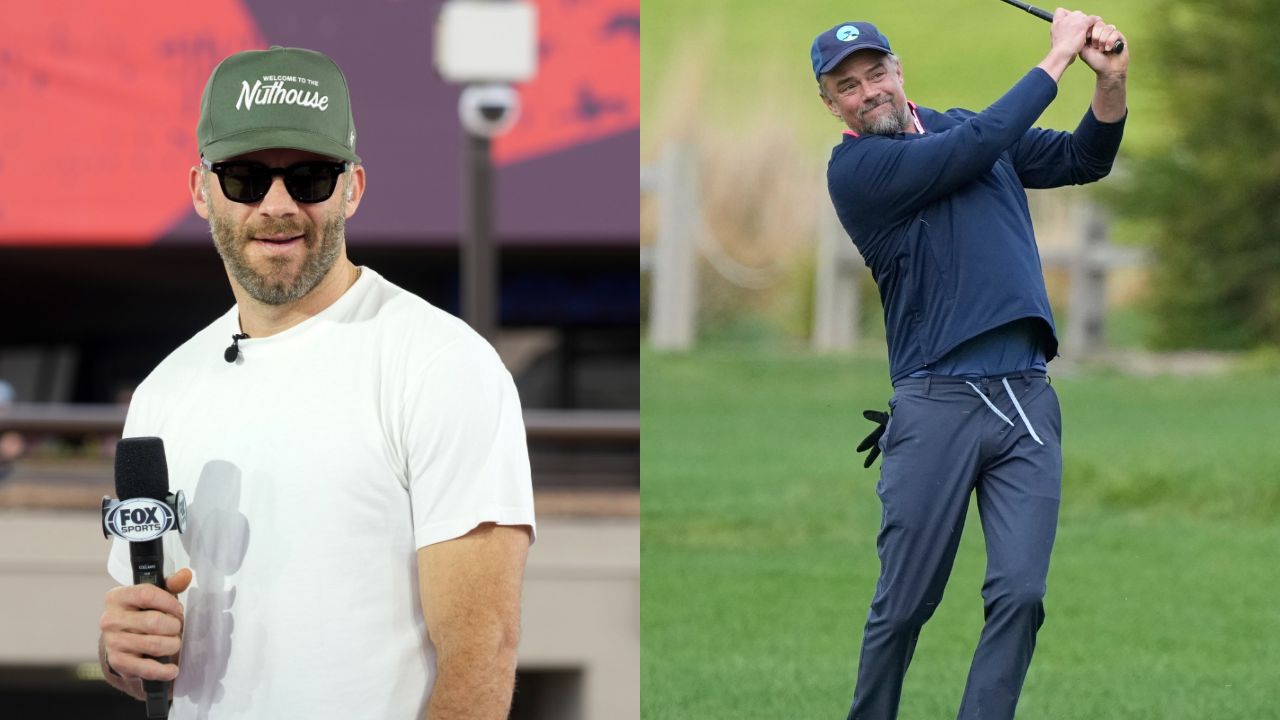
This growing imbalance was the focus of a recent episode of Games with Names, where former Patriots wide receiver Julian Edelman and actor Josh Duhamel discussed the unintended consequences of the NIL boom.
Julian Edelman voiced his concern about college football morphing into a version of professional football, where smaller programs like North Dakota State University (NDSU) —once a rich pipelines of future NFL talent — are being left behind in the NIL era.
“Those schools are going to get hurt with NIL. Because if a kid pops off at college, he’s going to dip out to the Pac 12 or go to the MAC and go to the Big 12 after that. It’s just Pro Football now. It’s crazy,” Edelman opined.
Edelman is not the only one to hit out at the NIL. The likes of Nick Saban and Micah Parsons have been critical about it as well. College football was the breeding ground of talent development earlier, which went on to reflect the quality of football in the NFL.
But with money coming into the picture, smaller programs have taken a huge hit.
Duhamel explains NDSU’s downfall because of the NIL
Duhamel, a proud NDSU supporter, pointed out how just one big-money move by a powerhouse program can cause a ripple effect across the college football landscape. Like how Caleb Williams went to Oklahoma, and that pushed Spencer Rattler to South Carolina. Williams then went to USC, and that made Jaxson Dart transfer to Ole Miss.
Programs in the Football Championship Subdivision (FCS) — formerly known as Division I-AA — have long provided athletes not only with strong on-field development but also quality education. Schools like NDSU have consistently punched above their weight, producing NFL-caliber players like Carson Wentz, Trey Lance, and Easton Stick. But NIL has shifted the power dynamic.
Despite NDSU’s dominance in recent years, the ‘All My Children” actor fears the Bison could start losing talent to FBS programs unless something changes.
The question now is: Can they remain competitive without matching the spending power of bigger schools?
“Schools like NDSU, who really get hurt by this NIL, this transfer portal thing. NDSU has a big problem with these guys who are popping off, gone. My thinking is that there are also guys at Clemson or whatever school who are supposed to be the guy but aren’t the guy, that are just right there, might go down to NDSU to get a real shot, to make sure they play.”
Wealthy programs have the resources and recruiting power to pluck talent from anywhere, even from schools that have already invested time and effort into developing those players. Smaller schools have taken a hit in this new NIL-driven era. They’re operating in limited markets, with less exposure and fewer funds to offer competitive compensation.
Opportunity over paycheck?
Meanwhile, powerhouse programs are stockpiling talent for the future, often recruiting multiple high-end prospects at key positions and stashing them on the bench for a season or two. Some athletes are even content to sit, so long as the money is good.
This creates a logjam at the top and a drought at the bottom. Talent is no longer trickling down to smaller programs like it used to. So, what can schools like North Dakota State do to stay competitive?
In an era where money and NIL dominate, sometimes the most compelling offer is simple: “We’ll let you play.” For athletes hungry to develop their skills and get on the field early, that opportunity can outweigh a paycheck. Programs like NDSU can focus on attracting driven players who want immediate reps and a chance to prove themselves.
Looking ahead, there’s even potential for a more structured approach, which is similar to the Major League Baseball system. The FBS and FCS could function like the majors and minors. Big schools could recruit and “loan” players to smaller programs for one or two seasons. This would allow athletes to gain valuable experience before returning to their original teams more polished and game-ready.
To make this model work fairly, Power Five programs should compensate smaller schools from their NIL pool for helping develop their talent. It would be a win-win: big programs benefit from improved players, and smaller schools get financial support and continued relevance in a shifting landscape.
About the author


-

Kris Johnson •
Zxavian Harris Move Exposes NFL-College Eligibility Gap: There’s ‘No Regulation’
-

Kris Johnson •
Andy Reid Puts Patrick Mahomes on Track to Return for Chiefs’ Season Opener
-
Kris Johnson •
Chargers Add Oregon Tight End Patrick Herbert to Practice Squad
-

Kris Johnson •
Klint Kubiak Leaves Raiders Quarterback Battle Unsettled After Preseason Win
-
Kris Johnson •
Aaron Donald Decision Still Rests on His Timeline, McVay Says
-
Kris Johnson •
Commanders’ Throwback Gear Revives a Controversial Identity