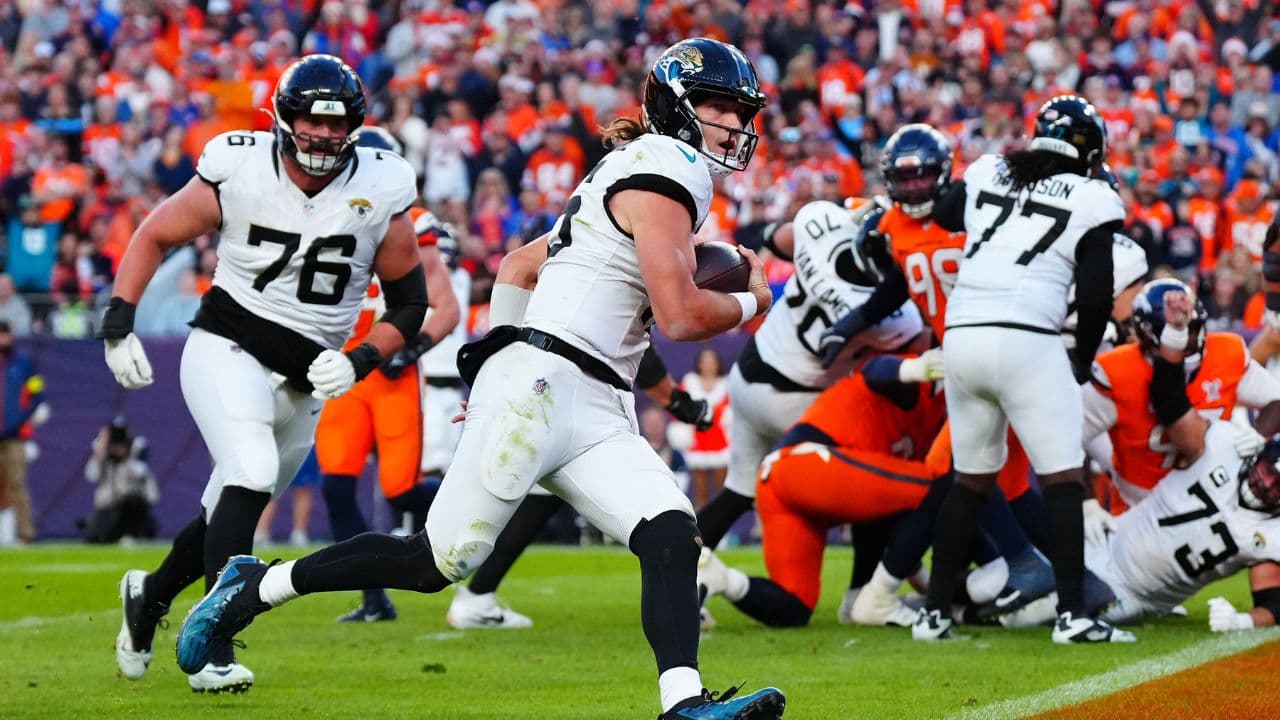
The Denver Broncos’ pass rush has been the cream of the crop this season. They might not break the NFL record of 72 sacks in a season with one game left (needing eight more), but man, this defense has been dominant. Denver has also won 12 of its last 13 games. The only loss in that stretch came against the Jacksonville Jaguars, who completely disrupted Denver’s famed pass rush in Week 16.
Advertisement
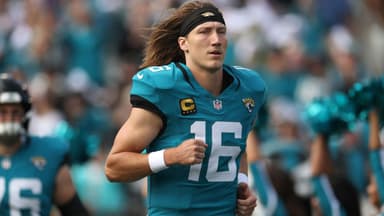
The Trevor Lawrence-led Jags started slow, even giving up a few sacks in the opening drives. But once the offense settled in, the Broncos’ secondary looked lost.
Jacksonville went 4 of 5 in the red zone against Denver’s top-ranked red-zone defense and scored on six of their final seven possessions. So how did the Jags manage to slow things down and dominate? Former QB Kurt Benkert has the answer.
Benkert, while breaking down a very clever play, highlighted how Jacksonville used a slow-breaking huddle. Center Robert Hainsey walked to the line at a deliberate pace, knowing full well that the offensive line, receivers, and Lawrence needed extra time to set up.
Once at the line, Hainsey gave the first Mike Point to communicate calls and adjustments to the offense, further slowing things down to disrupt the Broncos’ defensive timing.
Hainsey then delivered a second Mike Point, which Benkert believes is essentially padding to let the offense fully settle and keep the defense guessing. What follows is a very quick snap, contrary to the slow setup before it (the QB didn’t make any call here). And by the time Lawrence received the ball, the Broncos’ defensive line was not ready to rush. They didn’t even reach the O-linemen by the time Lawrence stood tall.
That evidently gave the QB extra seconds in the pocket to scan the field. When he dropped back, the pass rush still hadn’t reached him, giving the offense a major advantage.
The receivers, meanwhile, were initially blanketed by Denver’s secondary. Lawrence then cleverly moved the play to the weak side of the defensive line, and then Parker Washington created separation from his defender. This gave Lawrence just enough time to connect with him, close to the middle of the field.
Benkert emphasizes that the success of this play relied entirely on the timing of the delayed huddle and the quick snap. He also believes that Jacksonville had practiced this sequence repeatedly in preparation for game day.
[Highlight] Kurt Benkert breaks down how the Jaguars disrupted the Broncos pass rush with a quick snap strategy.
byu/SuperSaiyanTLaw innfl
Washington played a key role in that play, showing great separation and quick thinking to get open. By the end of the game, he finished with six catches for 145 yards and a touchdown. The Jaguars’ rushing attack complemented the passing game, with Lawrence himself scoring in the third quarter to break a 17-17 tie.
Jacksonville ended up winning 34-20, and it’s safe to say head coach Liam Coen’s experiment paid off. It’s no wonder he’s now a strong candidate for Coach of the Year.
For Denver’s credit, the Broncos still managed to sack Lawrence five times. But it wasn’t enough to protect their 12-game home winning streak.