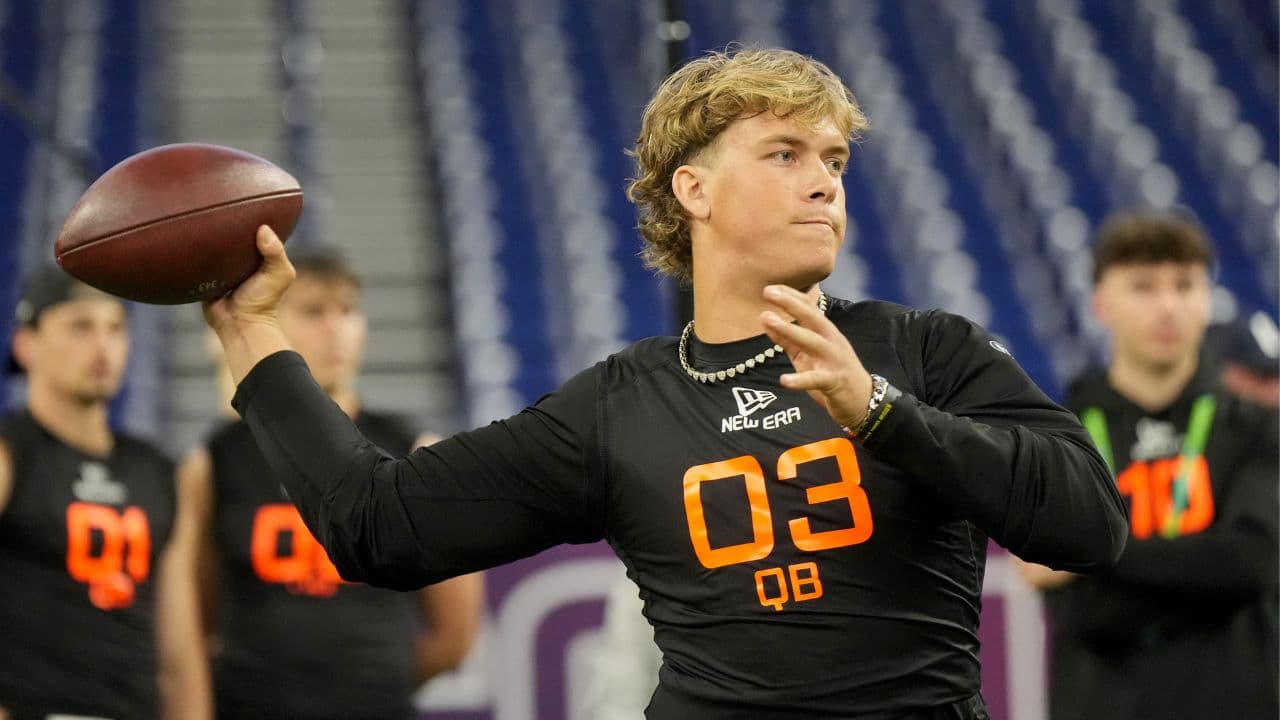
Whenever the football season ends, we get only a few weeks to get over the Super Bowl hangover before diving straight into the NFL Combine. It takes place every late February and, for the past two decades, has been held at Lucas Oil Stadium. It runs for a little over a week, with athletes from all over the country coming to impress NFL coaches, GMs and scouts, to take their game to the next level.
Advertisement
The biggest attraction in these events, even for fans, especially those whose teams lack a signal-caller, is the QB drills. Granted, we’ve seen most top-rated QBs skip the physical portion of the Combine year after year, but those who do participate are scrutinized thoroughly. Those skipping the physical drills still get evaluated through unofficial but crucial sessions as well.
So, you must be wondering which of these drills turns out to be the most crucial for a QB prospect? Well, let’s dive in.
The most eye-catching drill is the 40-yard dash, and a 4.6 to 4.8 time is quite solid for a QB. But do NFL teams really think this is the most important drill? No. If teams are looking for pocket passers, they won’t care much if a QB runs a 4.9 or a 5.0. They’ll take note of it, sure, but it won’t be the deciding factor. Unless a team is specifically looking for a dual-threat weapon, this drill isn’t particularly important for the QB position.
The vertical jump and broad jump are two more drills we can set aside. Then there’s the three-cone drill, one of the more important exercises in today’s NFL Combine. It helps teams determine whether a prospect has functional agility and body control.
Gunner Stockton stopped his warmups throws to watch Dan Jackson run the 3-cone drill.
Jackson’s workout means something to all his teammates here after no invitation to the NFL Combine. pic.twitter.com/sK5wIrknC4
— Jack Leo (@theleoreport) March 12, 2025
This drill also shows whether a player can handle rapid changes of direction, crucial when navigating a collapsing pocket while keeping eyes downfield. For dual-threat or mobile QBs, it can help determine whether a prospect is NFL-ready.
The 20-yard shuttle drill, or short shuttle, also falls into the important category, as it highlights lateral quickness and reaction speed. Then come the passing drills, short outs and quick slants, comebacks and curls, rollouts left and right, red-zone fades. These are all crucial and allow NFL teams to evaluate a prospect’s footwork, rhythm, release speed, spiral tightness, and overall mechanical consistency.
So, which of these drills is the most important? We’d argue that while each drill discussed holds value in its own right, the most important one isn’t even an official drill: the interview and chalk talk. These sessions help NFL teams understand how well a prospect can read defenses, digest playbooks, communicate concepts, display leadership and composure, and demonstrate football IQ, along with humility.
Behind-the-scenes look — from Hard Knocks — of #Patriots QB Drake Maye’s Combine meeting with Brian Daboll and the Giants. pic.twitter.com/NFPJJEy1C4
— Brian Hines (@iambrianhines) July 10, 2024
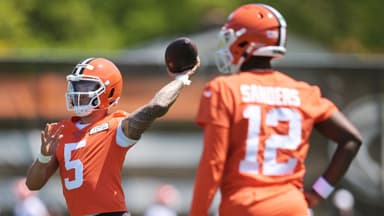
By the time the NFL Combine kicks off, some of the top QBs are already on teams’ draft boards. These interviews can provide confirmation and even motivate a team to give up draft capital to secure one of them. On the other hand, poor interviews can raise concerns, as we’ve seen in past cases (coughs, Shedeuer Sanders) where prospects reportedly struggled in those settings, leading to draft slides.
After the interviews, prospects who opted out of drills will likely participate in their Pro Days at their colleges, where NFL teams send reps for further evaluation. The Combine is essentially the official start of the process. Many steps are taken to scrutinize a prospect… and yet, teams still sometimes get it wrong.