


Ross Chastain’s Crew Chief Gives Crucial Insight on How the Next Gen Car Has “Changed the Scales” for NASCAR Teams

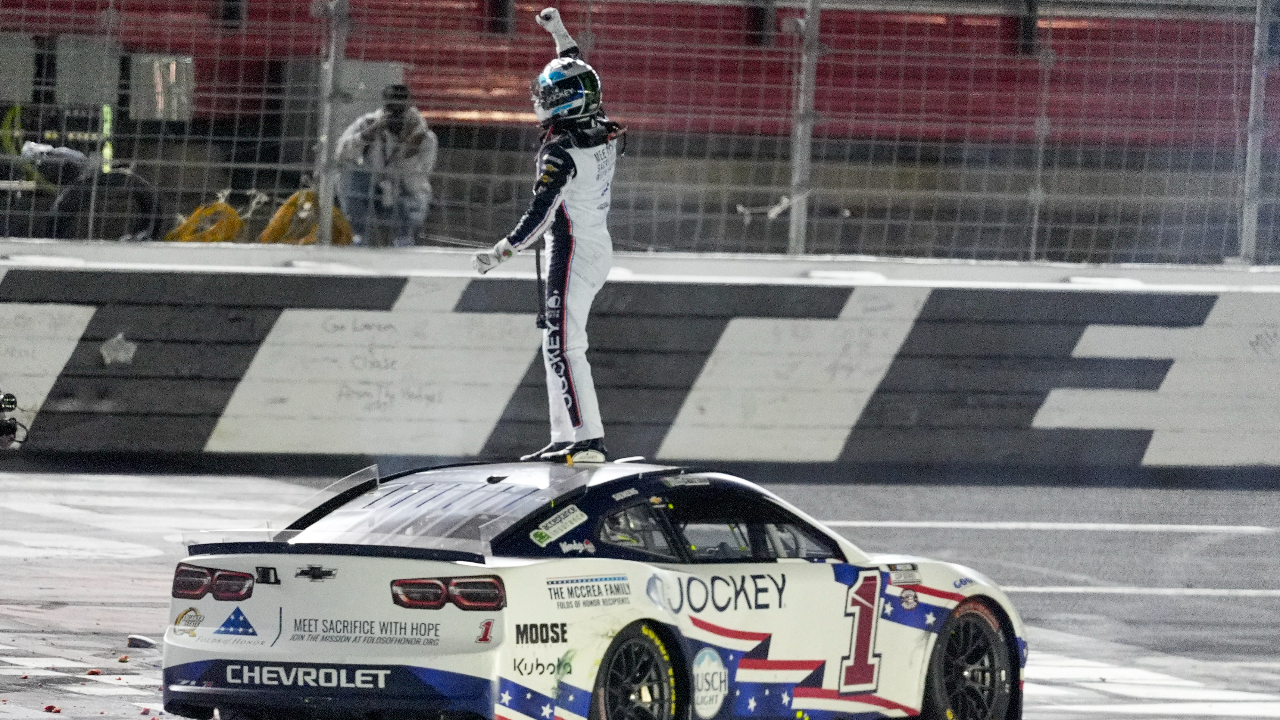
Every few years, it seems, NASCAR changes its Cup cars. Iterations have been Generation 1 (cars that ran from 1948-1966), Gen 2 (1967-1980), Gen 3 (1981-1991), Gen 4 (1992-2006), Gen 5 (also known as the Car of Tomorrow, 2007-2012), Gen 6 (2013-2021) and the so-called ‘Next Gen’ cars (also known as Gen 7, 2022-present).
Each iteration has had its own unique challenges and differences from previous generations of Cup cars. And even today, now in its fourth season of racing, the Next Gen car continues to be a difficult ride to adapt to, particularly for crew chiefs.
The combination of a spec car coupled with a more sports car-like design, some call it a ‘plug-and-play’ car, was supposed to make things simpler and easier for teams to adapt to.
That was the case in theory. But in practice, it’s a whole different ballgame, something that has somewhat limited what innovations crew chiefs like Phil Surgen, the bossman for the No. 1 Trackhouse Racing Chevrolet driven by this year’s Coca-Cola 600 winner, Ross Chastain, can do with the Next Gen car.
Surgen spoke about those challenges after Chastain’s big win, and his first win of the season, putting the No. 1 crew in the upcoming NASCAR Cup playoffs.
“I wouldn’t agree with plug-and-play, but you can take all the parts,” Surgen said. “It’s time-consuming, and it’s labor-intensive, but you can make all the cars nearly as good as the others, but it takes a long time to do that. There’s a lot of intricacies with these cars.
“Years ago, we were dealing in eighths and quarters of an inch (tolerances), and now we’re dealing in 5-thou and 10-thou. The increments that we’re talking about have just — the scales have changed in magnitude of what used to matter to what matters now.”
Equipment and Using It Correctly Is Crucial
Those kinds of ultra-specific tolerances, with no room for error or, God forbid, an unintentional mistake, put so much pressure on crew chiefs when it comes to inspecting how a car is set up.
If a team doesn’t use the right kind of equipment, or use that equipment in the correct way, in pre-race setup, it’s not going to be a surprise that the car may fail inspection once, twice, or even more times.
“The complexity of the equipment we use just to measure the cars is significantly different than what it was before, and all the parts are available,” Surgen added. “So, before, building a body was not possible overnight. But you could put a Next Gen body together overnight because you could just take the parts off the shelf.”
While that may seem simple enough, it’s not, Surgen noted. “Configuring them correctly at the level of detail that it takes to run in the front ten at a Cup race is a Herculean effort,” he said.
Who knew Hercules would have such an impact on NASCAR racing, right?
About the author


-

Nilavro Ghosh •
NASCAR Review: Ross Chastain Upbeat Despite Fading Playoff Chances After Daytona
-
Gowtham Ramalingam •
“Just Straight Bangers”: Front Row Motorsports Wins Over the Internet With Incredible Marketing Play
-
Gowtham Ramalingam •
Which Are the Most Expensive NASCAR Races for Tires?
-

Nilavro Ghosh •
Christopher Bell Breaks Eight-Year NASCAR Streak for Joe Gibbs Racing
-
Neha Dwivedi •
“Getting Tired of Hearing About Kyle Larson”: Why Chase Elliott Could Make Major Change at Martinsville to Save Season
-
Neha Dwivedi •
“It’s a Tough Spot”: Tyler Reddick Sympathizes With NASCAR Amid Chicago Officiating Controversy