


F1 Expert Breaks Down Torturous Biological Reactions That Led to Drivers Dropping Like Flies at the Qatar GP

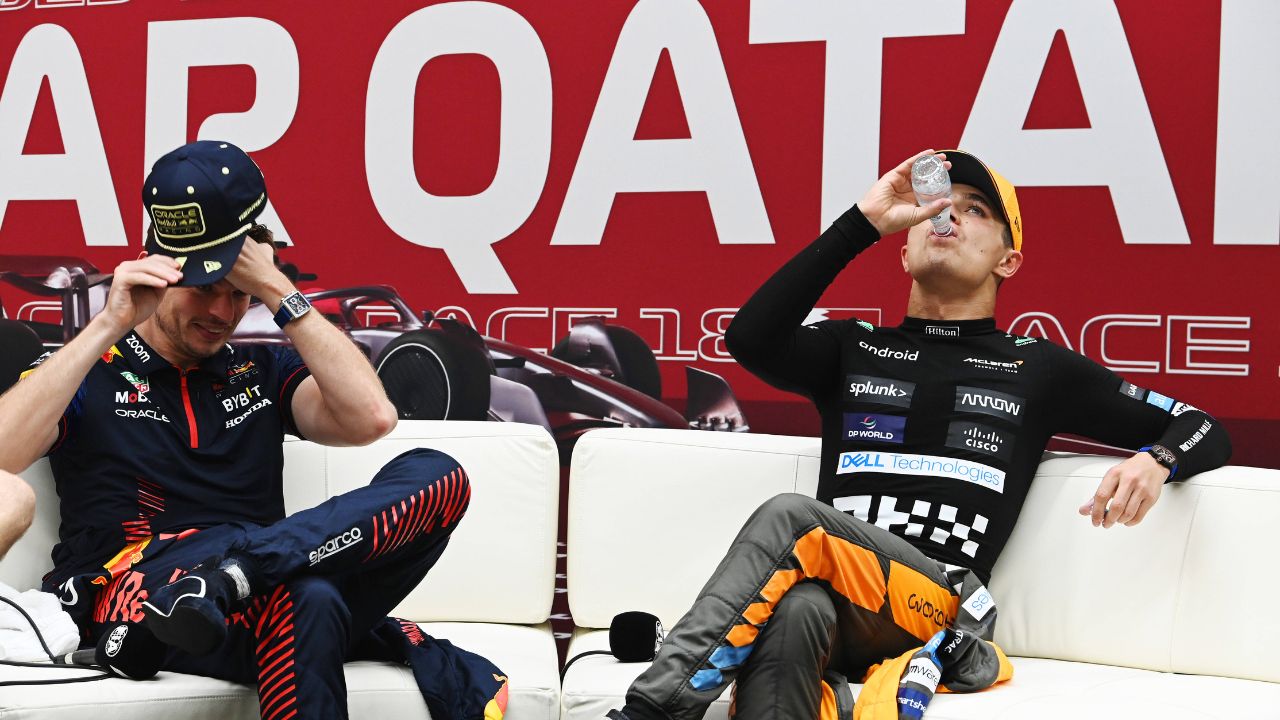
F1 drivers adhere to a rigorous training regimen in order to be fit for any racing conditions. The Qatar GP, on the flip side, surprised many drivers, who described it as the toughest race of their careers. As a result of extreme weather conditions, a number of drivers encountered difficulties. While Oscar Piastri called the race 57 qualifying laps,” Esteban Ocon felt nauseous and puked in his own helmet. Other drivers reported it as “dangerous” and felt like “passing out,” in high-speed turns.
Though F1 was fortunate to escape with no serious health problems for their drivers, an F1 trainer expert has described what really happened in the cockpit. Following the heat on Sunday morning, the night race was packed with humidity. At a track comprising high-speed turns, the temperature of 30 degrees Celsius felt like it was in the 60 to 80. This scenario resulted in the horrible biological reactions that the F1 driver experienced on Sunday. The situation was so stressful that some of the 20 drivers had to skip the scheduled media meeting and return to their team hospitality rooms for a moment to catch their breath.
How did the extreme conditions make the Qatar GP a challenging race for F1 drivers?
The weather in Qatar has been a topic of discussion in recent days. Given the circumstances, Sam Village, an F1 trainer, explained the scenario at the Lusail circuit on the Sky Sports F1 podcast. While gathering information from people such as Joe and Rupert (Carlos’s coach), Village mentioned that due to the dry heat throughout the day, the evening in Qatar was humid, making the atmosphere uncomfortable.
He added that the severe heat is one reason why the 2022 FIFA World Cup had to be hosted in December. However, because of the tight schedule of F1, the Qatar GP took place in October. Sam went on to explain the nature of the circuit, which was made up of high-speed bends.
While they were winding up the conversation, the F1 trainer was asked two questions that summarized the physical reaction the drivers may have had. In response to an inquiry about the drivers’ physio loss, Village explained everything, claiming it was normal.
He said, “I mean the fainting is the heat causes low blood pressure cause well your blood vessels open up so there could be a little bit of blood pooling just you’re down to gravity basically it could all be in their because it’s not like they’re running along or cycling.”
While taking of vomiting he said low blood flow causes that vomiting and nausea in the digestive tract, producing stomach discomfort and the need to remove undigested food to cool down. Finally, Village explained how the extreme temperature affects the driver’s G forces.
What are the steps taken by FIA to prevent the torture?
After the Qatar GP, decided to take action. The governing body has always been vigilant in protecting its drivers from potential hazards. So after seeing the dire conditions of drivers, like Logan Sargent, they felt it was time to act.
According to Reuters, the IAF has” Begun an analysis into the situation in Qatar to provide recommendations for future situations of extreme weather conditions.” These metrics cover a wide range of topics. Initially, providing guidance to competitors will be a priority. Additionally, research will be focused on improving cockpit airflow with high efficiency.
🚨 | Fernando Alonso suffered physical burns in Qatar, as his cockpit overheated.
Other drivers vomited mid-race and struggled to climb out of their cars. Full report below:https://t.co/ICrGTx6a9U
— formularacers (@formularacers_) October 10, 2023
To manage the potential repercussions of extreme weather, the FIA will alter the calendar to match a suitable environment. Aside from that, the organizer will search for similar events in extreme conditions, such as “cross-country races,” for potential uses in circuit events. Given these life-threatening consequences, the FIA has proposed alternative solutions, including a race in Qatar in December next year, when temperatures will be reduced. For the time being, the organization believes in taking, ” material action now to avoid a repeat of this scenario.”
About the author


-

Samnur Reza •
Which NFL Team Does F1 Champion Lando Norris Support?
-
Anirban Aly Mandal •
Frederic Vasseur Slammed by Ex-Ferrari GM for Picking Lewis Hamilton Over Adrian Newey
-
Vidit Dhawan •
F1 Champ Stands in Jack Doohan’s Support as Security Threat From Franco Colapinto Fans Comes to Light
-

Aishwary Gaonkar •
“They Think I’m an Idiot”: Ted Kravitz Accepts -7 Rating on His F1 Show With Jacques Villeneuve
-

Vidit Dhawan •
“That Is NOT a Coincidence”: Fans React as Carlos Sainz’s Girlfriend Rebecca and Ex Isa’s Paths Cross
-

Aishwary Gaonkar •
“Who the Hell Is This Guy?”: Zak Brown Recalls the Time Fans Ignored LA Lakers to Get His Autograph