


Is Training to Failure Beneficial? Renaissance Periodization Expert Dr. Mike Israetel Reveals the Truth on Chris Williamson’s Podcast


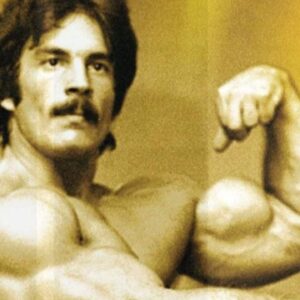
Training to failure was a method that late legend Mike Mentzer swore by. His idea was that muscles grew better and stronger when an individual properly practiced this method. Yet, exercise scientist Dr. Mike Israetel believed otherwise.
While the technique was truly popular, there was more to it than met the eye. And Dr. Israetel laid bare the facts and truths about it on Chris Williamson’s podcast. Some of the key takeaways from the subject were how training to failure resulted in larger amounts of fatigue and an unbalanced growth-to-fatigue ratio.
The sports physiology researcher acknowledged that the technique did result in muscle growth. But while consistency mattered, in this case, moderation was key. If one overdid it, training to failure could prove to be detrimental. He revealed that it was the reason why icons like Mentzer championed the technique. While they would push to failure with all their intensity, they made sure to take time to recover.
Instead of training till total failure, Dr. Israetel revealed that he believed in gradually increasing the weights that one worked with. While the number of sets and reps could fall a few numbers shy of failure, incrementally increasing the weight would eventually lead to a similar situation.
“Automatically, because your body can’t adapt that quickly, you’re going to reach failure a few weeks in – four to six weeks in.”
This helps determine one’s capability and, therefore, pursue workout plans that lead to adding more weight. This is a smart way to increase strength without subjecting the body to the risks of training to failure. Dr. Israetel came clean on individuals who wished to train to failure with a higher number of sets:
“The downside there is, on the higher ends of that spectrum, you are reaching into…junk volume… you’re training but your nervous system is so tired, it’s not even recruiting as many of the muscle fibers as you want.”
Another important aspect of training to failure that Dr. Israetel stressed was the recovery time between two workout days. Mentzer often spoke about having a 72-hour rest period. But the exercise scientist specifically laid out the plan— striking the balance between two training days, such that you feel you’ve just gotten physically better. Not completely recovered but not fully exhausted even after a few days of rest. The balance would lead to optimum growth.
How did Dr. Mike Israetel feel about Mike Mentzer’s routine?
Having harbored respect for the late icon, Dr. Israetel once sat down to critique Mentzer’s training video. His heavy-duty plan had many nuances that the physiologist spoke about in detail.
He vehemently disagreed with some of his points, such as that HIT was the ultimate muscle-building formula and that larger muscle groups should receive priority training. However, he resonated with how Mentzer used his posture and technique to perform exercises and how full range of motion was an efficient technique to get maximum benefits from the exercise. While certain ideas may be outdated, there is no denying that Mentzer was ahead of his time, and now Dr. Israetel’s ideas have acted as a guiding light.
About the author


-

Rahul Goutam Hoom •
Arnold Schwarzenegger Shares Simple Steps to Keep Blood Pressure in Check
-
Radha Iyer •
Mike Mentzer Once Unveiled Methods to Go Beyond Rest-Pause Training for Maximum Gains
-

Radha Iyer •
Arnold Schwarzenegger Debunks the Misconception of Muscle Soreness for Gains
-

Radha Iyer •
Bodybuilding Coach Greg Doucette Addresses Hany Rambod’s Recent Criticism of Him
-

Radha Iyer •
“This Would Hurt Feelings…”: Jay Cutler Stuns the Bodybuilding World With His ‘Prep Files’ From 2010
-

Rahul Goutam Hoom •
Can High Protein Diets Improve Kidney Health? Arnold Schwarzenegger Answers With Science-Backed Evidence