


“Difficult to Come to Conclusion”: Guenther Steiner Wary of Judging Teams Over Pre-Season Testing

Pre-season is an exciting time as for the first time, new cars take to the tracks and drivers dust off the cobwebs for one final dress rehearsal before the season gets underway, which is why the focus of the F1 community is on the Bahrain International Circuit.
The first day of the 2025 pre-season is officially in the history books, and there were some rather interesting stories to tell. For instance, rookie Kimi Antonelli topped the charts in the morning session, signaling that perhaps Mercedes is back.
Or maybe not, it’s difficult to determine that right now.
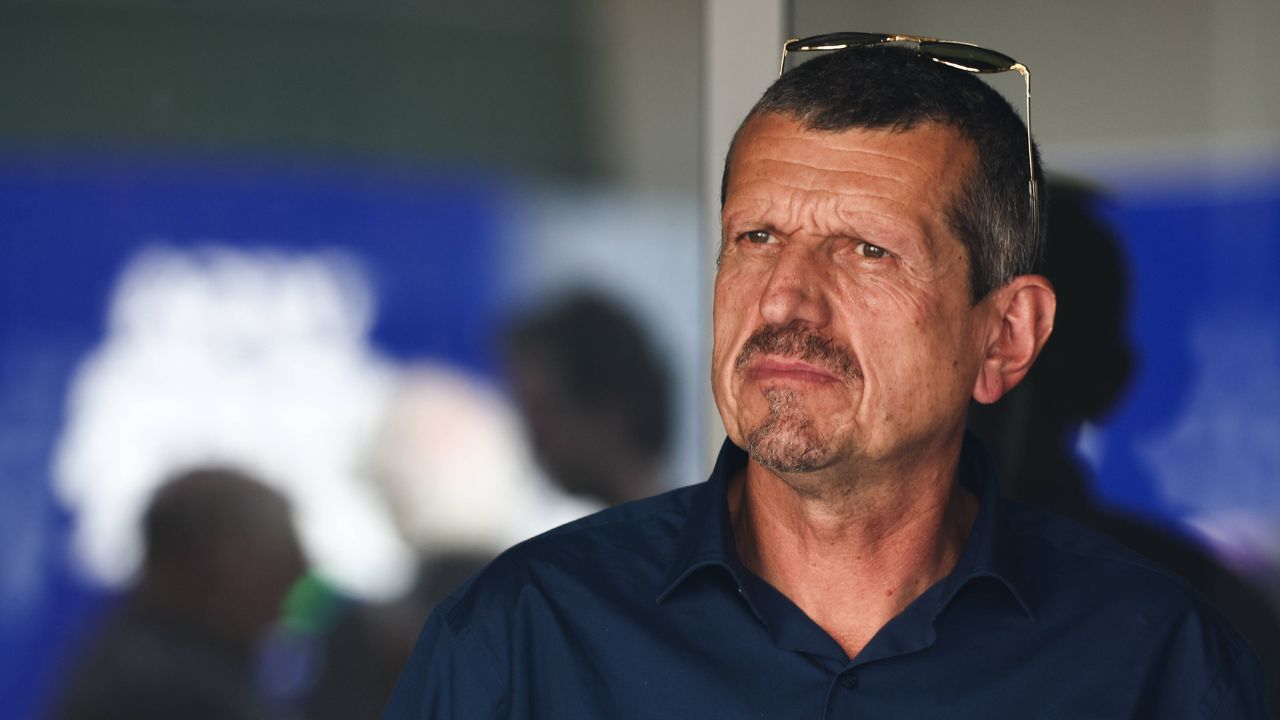
That’s what Guenther Steiner said on the Nailing the Apex podcast. It was a competitive day of running, but as testing sessions often teach viewers, results should be taken with a pinch of salt.
Steiner was asked about his take on the 2025 challengers, and he replied by admitting that with the “stability of rules” from the ground-effect era now set in, the cars have become a lot closer in terms of performance. “Analyzing a part of a car, saying ‘this is fast or this is slow’ is difficult,” the former Haas Team Principal added.
Steiner revealed how in the past, with each team adopting a different concept, it was easier to guess what could or couldn’t work. “You look at the times and then you come up with a conclusion….I’m guessing just as much as you guys.”
That said, Steiner feels that he will have a better idea of where teams stand on Friday—the last day of pre-season—afternoon.
“Until Friday afternoon, I think it’s difficult to come to a conclusion…you can see who has got problems, who is running…you get more information in,” the 59-year-old added.
What teams do in pre-season?
The most important word for all ten teams in testing is data. That’s what they all set out to collect in numbers because it allows them to truly understand where they stand heading into a new season.
The engine, the aerodynamic flow, tire wear, etc. are all analyzed in detail, which is why all of the cars run on different programs. It’s not a contest to see who is the fastest driver or who the favorite to win the world championship is.
As evidenced on Wednesday, some teams fit aero-rakes into their cars to gather data for those working in the wind tunnels back at their factories. These metal objects are fitted with sensors that measure airflow around the car.
Some also use flow-vis paint, which is a mixture of fluorescent powder and oil. When cars go at high speeds, these paint jobs form a pattern on the cars which engineers later study.
Carlos sporting some chilli red flow-vis ️#F1Testing #F1 pic.twitter.com/t1CXRI2PV0
— Formula 1 (@F1) February 26, 2025
These are just some of the more visible measures adopted by teams during the three days of free running. They are free to run any fuel load or fine-tune their cars as they wish. That’s why, as Steiner insisted, it’s difficult to determine who is truly fast and who isn’t.
Perhaps Antonelli and Mercedes will actually be on top this year, but we won’t know for sure until the first Grand Prix weekend kicks off in Melbourne on March 14.
About the author


-

Anirban Aly Mandal •
Alex Albon and Carlos Sainz Planned to Perform Kendrick Lamar’s ‘Walk’ During F1-75 Launch, Only to Drop It at the Last Minute
-

Somin Bhattacharjee •
“The plan isn’t only for 2022, it is to keep going for longer”: Fernando Alonso talks about ‘El Plan’ and how Alpine will be pushing for long term success in the future
-
Utkarsh Bhatla •
FIA confirms a driver objected to Rosberg interviewing the top 3 drivers post the race
-
Vidit Dhawan •
Days After Reporting $4.4 Billion Income, Saudi Bank Joins Visa and Cash App for RB F1 Partnership
-

Tanish Chachra •
Max Verstappen Extinguishes Retirement Rumors by Stating Ongoing $55 Million Commitment With Red Bull
-

Sabyasachi Biswas •
“For F*** Sake” – Charles Leclerc Gets Denied to Enjoy the Last Race of the Season by His Engineer