


Red Bull Confident To Topple Industry Giants Mercedes and Ferrari With ‘Completely Nuts’ Powertrains Project: “It’s Just a Label”

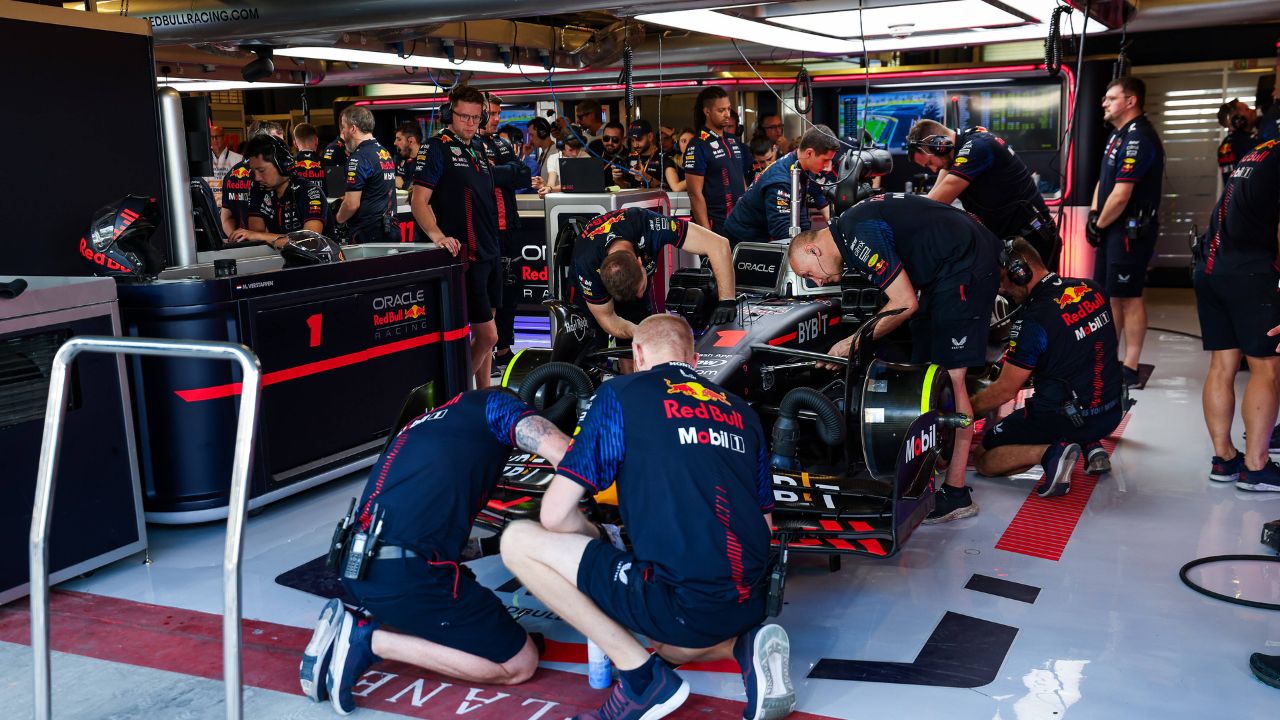
Red Bull Racing is embarking on a transformative journey, transitioning from Honda engines to developing their own in-house power units, set to debut in 2026. This strategic shift represents a bold quest for autonomy and advancement in the fiercely competitive F1 environment.
Significantly, through this transition, Christian Horner and his team aim to go beyond conventional participation in Formula 1. Their objective is to solidify their presence in the sport by decreasing dependence on external suppliers.
Additionally, their ambition extends to establishing a substantial presence in the engine manufacturing sector. With this, they seek to rival established names such as Mercedes, Ferrari, Audi, and the VW group.
While reflecting on this during a recent Secret of Success podcast, Horner stressed the importance of thorough research and the willingness to make these substantial decisions. The Briton also emphasized the value of cultural and ethical factors, which he thinks will be critical to Red Bull’s success in this venture.
He said,” It’s completely nuts to think that we would have the wherewithal of an OEM. But again, it comes down to culture, the quality of people, work ethic, and that sense of team”.
However, in conclusion, Horner expressed confidence that Red Bull can outperform the competition as long as they have the necessary “ingredients” irrespective of the established labels of their rivals. The Briton said, “There’s no reason we can’t be Mercedes, we can’t be Ferrari. It’s just the label. It’s just a brand. Anybody is beatable”.
Does Red Bull have a backup plan in case it fails in 2026?
Red Bull Racing is moving away from depending on Honda for their powertrains, opting instead to partner with American carmaker Ford to create their first-ever in-house powertrain. This strategic maneuver represents a notable shift towards autonomy, showcasing Red Bull’s aspiration for increased control over their fate in Formula 1.
However, stepping into unknown realms introduces inherent risks and uncertainties. The situation becomes more intricate following Red Bull taskmaster Helmut Marko’s recent disclosure. According to one of his recent interviews with OE24, the 80-year-old revealed that Red Bull has not opted to put in place a backup plan.
Certainly, this will leave the 2023 Constructors’ Champions vulnerable to difficulties that could impact their performance, beginning in 2026. Apparently, with the upcoming engine regulation changes slated for the 2026 season, the altered dynamics of Formula 1 cars could potentially shuffle the established pecking order on the grid.
Hence, taking a risk on an entirely new powertrain without having an alternate plan in case of issues might result in a disastrous season for Red Bull. However, as things stand the Milton Keynes outfit are aware that their focused attention is required to successfully complete the powertrain project within the allotted time frame.
About the author


-

Naman Gopal Srivastava •
Despite Winning, Red Bull Boss Calls Las Vegas Grand Prix Brutal as Everyone Leaves ‘Slightly F**ked’
-

Anirban Aly Mandal •
“It’s About Saving Money”: Max Verstappen Reveals Red Bull’s Big ‘Compromise’ in Performance to Never Repeat the 2021 Offence Again
-

Tanish Chachra •
“This is Pierre, I can smell it!”: Yuki Tsunoda identifies Pierre Gasly in disguise by just smelling him; not helping the rumours
-
Vidit Dhawan •
Lewis Hamilton Contract Talks Put on Hold as Mercedes Rattled After Bahrain GP: Report
-

Sabyasachi Biswas •
“Realistic” James Allison Prepares for Battle Against “Worthy Opposition” Red Bull
-

Veerendra Vikram Singh •
“Being Nice F**ks Me Over All the Time”: Charles Leclerc Furious After Carlos Sainz Refuses to Follow Ferrari Orders