


Are NFL Game Balls Made of Pigskin or Cowhide? Vice President of ‘Wilson’ Explains

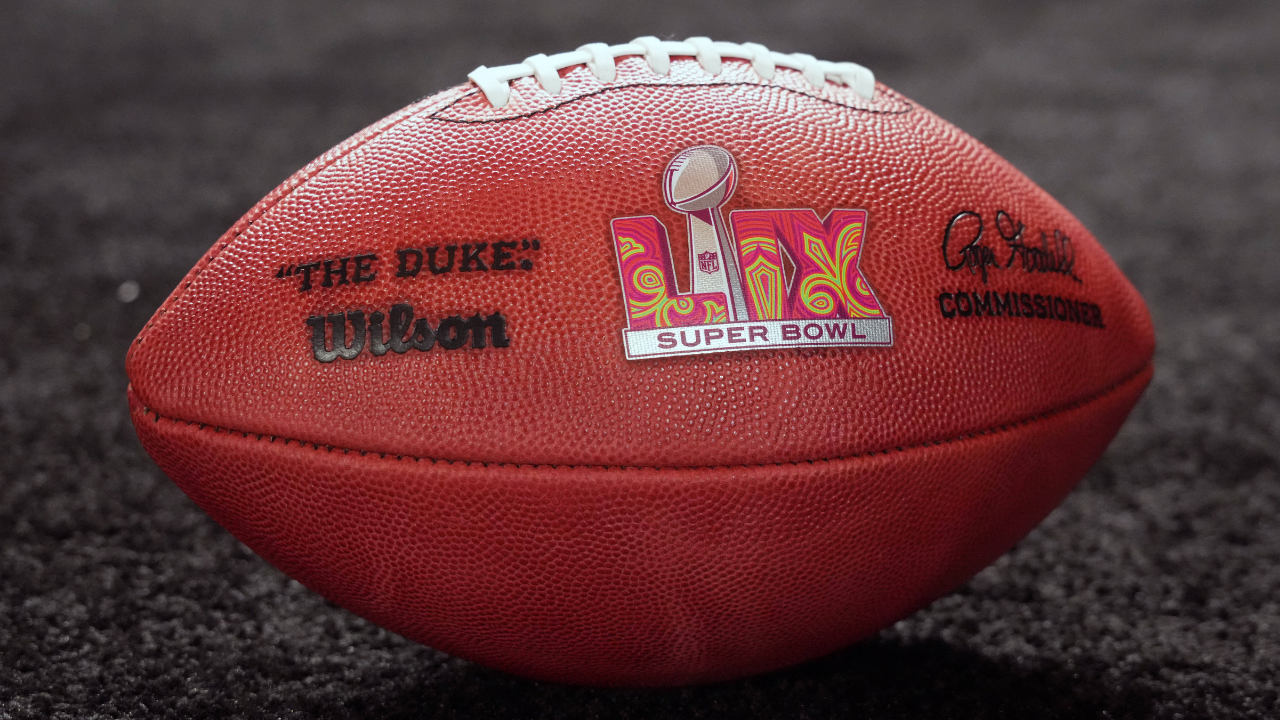
Fans have used the term “pigskin” as slang for football’s oblong playing device for ages. In the old days, pigs’ bladders would be stuck inside a leather shell to create footballs.
The term “pigskin” has withstood the test of time, but those ancient methods of football production have been left in the past.
Today, the NFL’s football manufacturer, Wilson, utilizes cowhides in their creation process. It’s a shocking reality to people who have spent their entire lives around the sport.
Earlier this year, the company’s employees broke the news to former wide receiver Steve Smith Sr. while he was on a tour of their facilities.
“Hold on. You’re telling me it’s not a pigskin, [but] a cowhide? This whole time. I’ve been bamboozled!”
Kevin Murphy, VP and General Manager of Wilson explained:
“Way back when all the materials were natural, and you would literally take the stomach of pigs for the bladder, stick that inside the leather and that’s what held the air. “
Wilson has been the NFL’s football manufacturer since 1941. League rules stipulate that every football for game usage must be hand-selected, Wilson-brand, and signed by the commissioner. Being the only football manufacturer, Wilson’s output is insane!
How many balls does Wilson produce per day?
Wilson, housed in Ada, Ohio, is constantly churning out footballs. Every Wilson employee, on average, makes 480 balls each day. That means the employees cut 1,920 panels of “pigskin” each shift!
Once the cowhides are cut, the panels are moved to a printing press. There, the NFL logo is stamped onto the balls. According to Wilson, their employees stamp 600 footballs each day. In the sewing process that follows, Wilson’s employees sew 700 footballs per day.
The most complex aspect of the process is stitching. Employees have to connect two panels together, creating “half sections.”
Then, they latch the two halves to make the whole ball. Wilson’s workers sew the panels inside out and produce 150 stitched balls during their shifts.
While stitching is very intricate, “turning the ball” is the most difficult part of Wilson’s process. You have to employ the proper mix of power and finesse to get the job done. Otherwise, you could potentially render the ball unusable.
After the ball is turned, it gets laced, inspected, and customized for each franchise. From there, it heads off to its intended organization and eventually winds up on the gridiron.
About the author


-

Sneha Singh •
Ryan Fitzpatrick Explains Why “The Chiefs Need to Lose Some Games” in Order to Achieve the Three-Peat
-

Aditya Rajput •
Sean McVay Recalls Aaron Donald Requesting Fine for Brief Bathroom Delay
-

Ayush Juneja •
“Jerry Jones Knows His Team Is Not Built Like That,” Said Richard Sherman, While Giving Jones a Reality Check for Claiming the Cowboys Can Beat the Eagles and the 49ers
-

Arjun Sukumaran •
Russell Wilson Is Amused at Nuggets’ Nikola Jokic Attempting to “Make Up” for Elbowing Suns Owner Mat Ishbia
-

Braden Ramsey •
Despite a $765M Mega Contract, Dak Prescott, Justin Herbert, and 6 Other QBs Outmatch MLB Star Juan Soto’s Annual Salary
-

Ayush Juneja •
Lamar Jackson Sports “GOAT” Friendship Bracelet Gifted by Young Fan After 3-Touchdown Game